New Year Same Crazy: Regulatory Changes for Energy

By: Chris Amstutz

Whoever started the idea that 2021 was going to be a more simple, normal year should be run out of town. *Insert more 2021 vs. 2020 meme’s here*.  New COVID strains, new politicians, and continued social uneasiness is making it feel like the 14th month of 2020. Add the fact that complex energy market regulations are back in the headlines and the chaos only grows. We have seen many stories floating around regarding the recent Executive Orders passed by the new Biden Administration affecting energy markets. As with all changes of the guard, it is out with the old and in with the new. We are here to dispel some of the fake news, and lay out what the facts are pointing to at this time.

Despite what your great uncle says on Facebook, Choice! Energy Management takes no stance of morality or political affiliation on any of the issues discussed, and merely hopes to shine a light on events that influence energy market prices.

Executive Order (EO) 13990: Protecting Public Health and the Environment and Restoring Science to Tackle the Climate Crisis

This EO was signed on the first day in office (Jan. 20) and most notably takes aim at cancelling the Keystone XL Pipeline. This notorious pipeline was set to transport 800,000 barrels of oil per day from Alberta, Canada to Nebraska. This infrastructure project is a lightning rod of symbolism, as it has now spanned 3 administrations worth of attention. Its cancellation is seen as a large blow to the Canadian oil industry, as well as the Gulf coast petrochemical industry. It is seen as a big win for environmentalists and Native Americans whose land is near the pipeline’s path.

EO 13990 also repeals more than 100 EO’s from the Trump Administration on climate and energy infrastructure policies. Many of the EO’s from the Trump administration were in place to repeal notable regulatory orders from the Obama administration (Cross State Air Pollution & Clean Power Plan ). The orders now being reinstated will impose limits and increased regulation on pipeline construction, pollution, drilling, emission standards, and power generation fuel sources.

Executive Order(EO) 14008: Tackling the Climate Crisis at Home and Abroad.

This Executive Order is the beefiest of them all on the energy front, and entails many climate and energy policies promised on the campaign trail. The order most notably directs the Secretary of the Interior to impose a 90-day moratorium on new oil and natural gas leases on public lands/waters (though in a way this does break Biden’s other campaign promise to not ban fracking). A few highlights of the implications of the drilling ban are:

  • The area most affected by the ban is the Permian region of Southeastern New Mexico.
  • Many of the companies operating in this region have “stockpiled” leases and the largest producers have up to 3 years to continue operating as usual.
  • Small drilling companies and ironically New Mexico tax revenues (a state that voted 55% for Biden & whose Albuquerque Congresswoman will be the next Secretary of the Interior) will be the most negatively affected.
  • Decreases in oil and gas supply will be minimal in the short run, but could fall in 2-3 years (just in time for a new set of election promises) if the policy is continued.

The winds of change were not limited to the ban on drilling leases. Other policies laid out in EO 14008 include:

  • The establishment of a National Climate Task Force across 21 Federal Agencies, as well appointing John Kerry as Special Presidential Envoy for the Climate.
  • The official development of emission reduction targets. The campaign promise was to set a path to cut all greenhouse gas emissions from the nation’s electric sector by 2035 and to make the country carbon-neutral by 2050.
  • A commitment to clean infrastructure projects, which will likely be manifested in significant grants and continued subsidies for renewable energy. This will have a continued influence on the power industry.

Executive Action: Commitment to the Paris Climate Accord

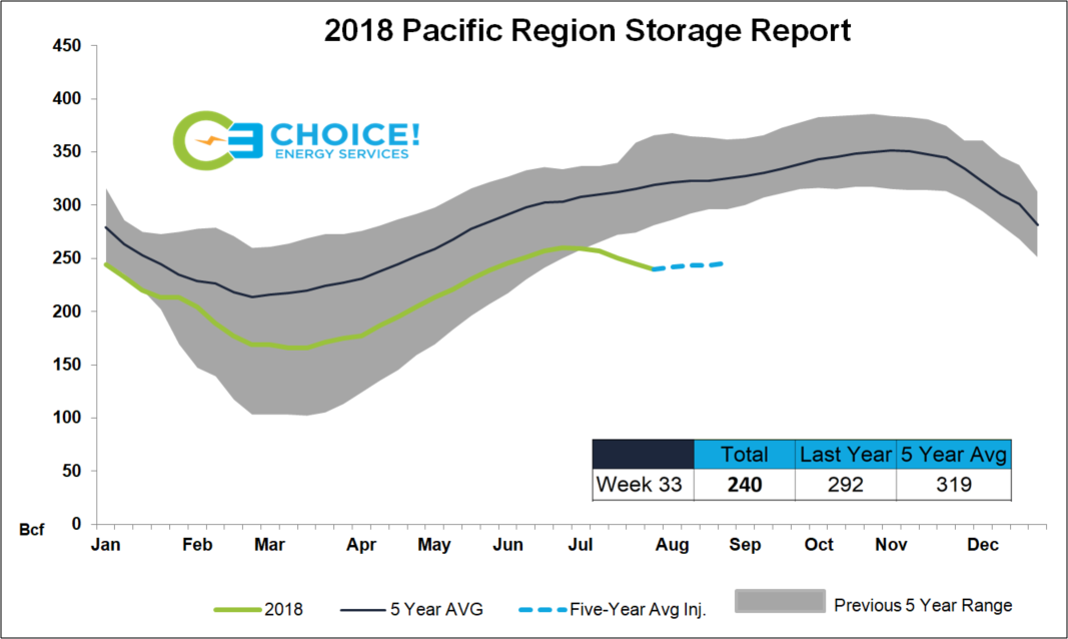
On his first day in office, President Biden also signed the action recommitting the U.S. to the Paris Climate Accord. While this action does carry a symbolic weight, it does not directly impact the energy markets at this time. The implications will be felt later, with further action taken on the previously discussed EO 14008 (the beefy EO). The extent to which the U.S. commits to lowering carbon emissions will impact all sectors of the energy markets. Natural gas and oil may see increased demand in the next 10 years, but could begin to lose demand past that. Coal usage will likely continue the slow decline. All carbon commodity usage forecasts depend upon on the penetration of renewable energy technologies in the market. Power prices will also be affected but those implications are largely regional and include nuances such as battery storage and intermittency/grid reliability issues.

All in all, the recent Executive Orders have been symbolic of the Biden Administration fulfilling campaign promises. You can view all of President Biden’s Executive Orders here. While there may not be immediate implications for the energy markets from these EO’s, the symbolically anti-carbon stance of this administration will likely have price implications in the next 2-3 years. Pipeline infrastructure, changing power market dynamics, and federal subsidies and taxes are all long term influences. Like any complex market, change takes time, and the implications will show in the future. We may not be able to see the exact path forward at this time, but we do have an idea of the direction. After all, it’s not like anyone accurately predicted the events of 2020 anyway.

via GIPHY

Cover Image Illustration by Jack Taylor, Bloomberg Green

The Energy Wizards of Oz: Trump & Biden 2020

By: Chris Amstutz

Never have we had Presidential candidates with such diametrically opposed energy policies. We have spoken in previous blogs about the intertwined climate/energy policy debate, and now we have been led up to the fork in the proverbial yellow brick road. Will we get behind the Tinman, Joe Biden, and grease the gears of a “green energy revolution”? Or will we continue down the path of the Lion, Donald Trump. In this blog we strive to reveal the men behind the curtain, and discuss potential implications for a few frequently discussed policies.

Drilling/Pipelines

The first part of the climate/energy debate focuses on the extraction of fossil fuels and their subsequent movement across the United States. In the last 8 years, the U.S. has grown to be arguably THE energy superpower of the world through an innovation in drilling, notoriously known as hydraulic fracturing (fracking). Oil and Natural Gas production has risen dramatically and has seemingly only been capped by the ability to physically move the commodities on pipelines. Policies being proposed would aim at hindering new drilling, either completely or more likely on federal lands. This, coupled with a more stringent and selective review of new pipelines, would likely slow the growth of fossil fuels and increase the future price of natural gas.  Both candidates have made it known that natural gas will remain an important part of our energy mix, but to what extent the commodity could be slowed in the next 4 years will depend upon the election.

Green Energy/Power

The toughest part of the journey to the emerald green city of the imagined US energy future, will be in the power sector. Proposals in this election call for carbon free power generation by 2035. Like a tornado across Kansas, this would shake up our generation fuel mix, currently 40% natural gas, 20% coal, 20% nuclear, 8% hydroelectric, and 12% from wind, solar, geothermal.

  • As we mentioned in past blogs, Nuclear Power Parts 1 & 2, this fuel source is considered carbon free, but draws its own criticism. Neither candidate has come out enthusiastically supporting expanded nuclear energy, but they have been open to it.
  • It has been proposed that natural gas generation be used as a bridge fuel source as we phase out coal power and build out renewable sources. This path to a carbon-free power sector would financially strand (end before costs are recovered) 100-300 billion dollars in fossil fuel generation assets (coal and natural gas).  The labor and capital needed to build enough wind and solar generation with needed battery backup systems, would be on the order of 10+ trillion dollars in government/private investment.

Any new, unplanned costs would likely be passed on to businesses and consumers or levied through a federal tax, potentially on carbon. While these dollar estimates do not factor in the hidden costs/benefits of the health of citizens and the climate, these are the known real numbers for a structural energy change. Good, bad, or indifferent, a path towards a green energy future could begin after the election.

Source: Wood Mackenzie

General Attitudes

Regardless of your preferred or projected outcome for energy policy in the US, it is no secret that this is an important election for the industry. Certain policies being proposed are further left politically, but it takes support from the scarecrow, tinman, and lion (all branches of the government) to enact policy change. This could delay or even fully prevent new policy from being enacted.  Donald Trump and the Republicans have been more supportive of the fossil fuel industry through word and action. Joe Biden and the Democrats aim to start the process of change in the industry to save the climate. Naturally, change brings volatility and unplanned costs in complex markets. Morality and politics of the issues aside, Choice! Energy Management will be here as the Good Witch of the North, monitoring and guiding clients through sound Risk Management involvement.

via GIPHY

Choice! Energy Management takes no political stance towards any energy policy discussed. The goal of this blog is to present, without bias, energy policy positions of each candidate in a light-hearted and informative manor.

Confidential: Choice Energy Services Retail, LP.

Choppy Waters: Power Market Volatility

By: Chris Amstutz

Businesses across the country are taking notice of the rapidly changing power generation mix. Is it simply due to the sight of wind and solar farms popping up along the highway? No, rather it is due to something more vital: their bottom line. From California, to Texas, to the Northeast, the impacts of an increase in power generation from renewable sources and a decline in coal-fired power are being felt. What lies on the river ahead? Recent news and pricing movements across the U.S. are showing signs of a straining grid, primed for increased volatility. Volatility presents opportunity in the energy industry and Choice Energy Management is working to remove the blindfold and safely guide your business to a stream of savings (a more enjoyable experience than re-watching Netflix’s “Birdbox” movie). Our first blog post of the roaring 20’s turns the rudder against the stream to dissect the current path for regional power market structures.

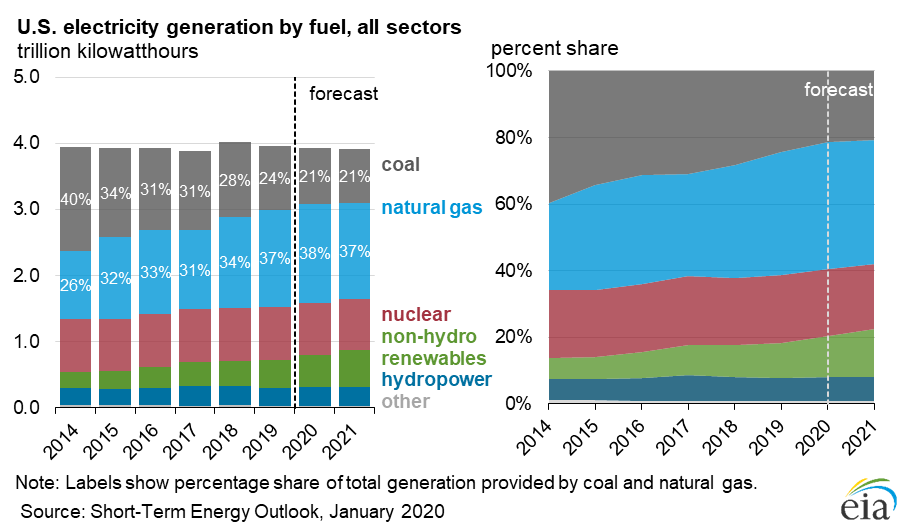
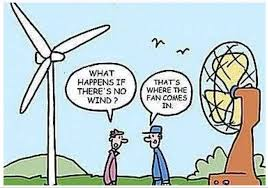
Nationally, we have seen a huge shift in the generation mix since 2014. While the chart above gives the breakout in terms of percentage change for each source of electricity, it does not fully tell the story for what is happening in power markets across the United States.  The introduction of intermittent electricity assets to the grid has posed new concerns and challenges that need to be addressed. More plainly speaking, when the wind doesn’t blow and the sun doesn’t shine, how will the electricity grid adapt to keep up with the power demands of end users. Without diverging down the deep, winding stream on the physics and technical nuances of power markets, here are the regions we are monitoring more closely for volatility in 2020:

CAISO: The push towards a Renewable Portfolio Standard for California of 50% by 2030 continues. The state legislature has remained hostile towards fossil fuel and nuclear generation assets. Many believe that the state government is challenging the grid too hard and too fast. The three main utilities (PG&E, SoCal Edison and SDG&E) are all pushing for rate hikes stemming from wildfire liabilities and the increased regional cost of natural gas. This market has already seen tremendous volatility, but tensions have calmed for now.

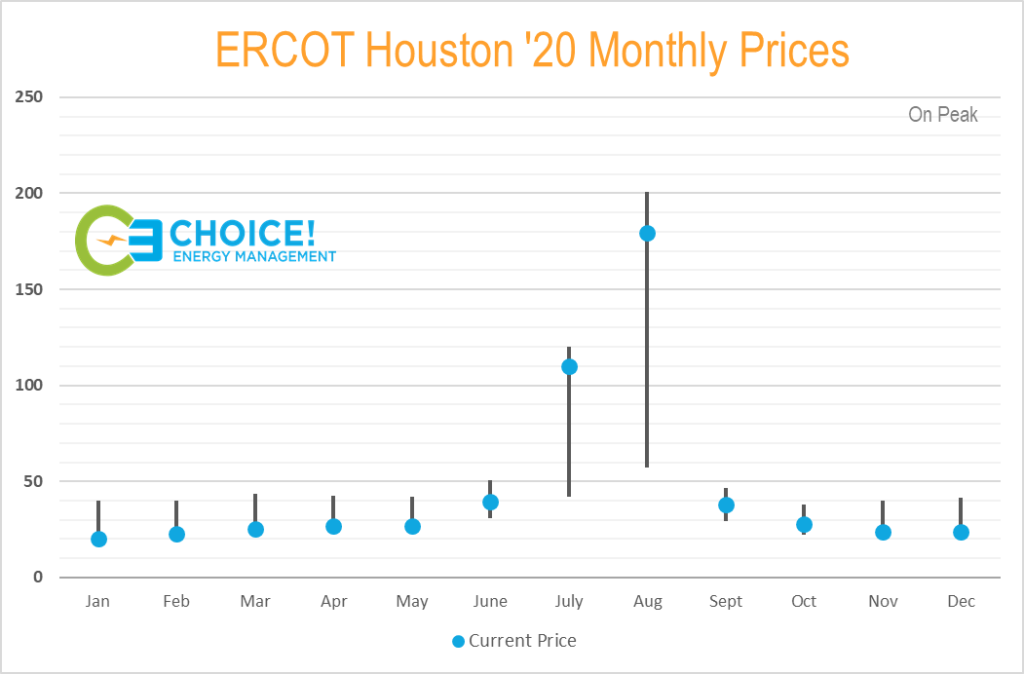
ERCOT: The latest report on Capacity, Demand and Reserves for ERCOT has projected a 10.5% reserve margin for summer 2020. The margin is projected to loosen to 15.2% and 13% in ’21 and ’22 respectively. Lost base-load generation from coal retirements has not fully been replaced by natural gas fired units. The renewable build-out has been substantial and is expected to grow to 15% of all generation utilized by the end of 2021. Low regional natural gas prices have created a scenario where power prices are near decade lows for all but the summer months. To entice new capacity, generators will need to be profitable in all months of the year, something that is hard, given the low prices 10 out of the 12 months (see below).

PJM: The current battle between the PJM regulators and the Federal Energy Regulatory Commission (FERC) over renewable energy subsidies distorting the market will likely not be solved soon. FERC’s latest order of expanding the Minimum Offer Price Rule (MOPR) aims to ensure competitive generation investment but may simply be an indictment of the flaws in the PJM forward capacity pricing structure.  The outcome of the expanded MOPR will likely beget more regulations from state legislatures, and PJM futures prices will be susceptible to the stroke of a pen.  

The depth of nuance affecting prices in region specific power markets is enough to make even the most avid energy blog connoisseurs head spin. The topics discussed in this blog warrant much deeper discussions than the individual paragraphs present. From 2014 to today, the soft trickling whisper generated from the impact of renewables has grown to a small but roaring stream. Time will tell how choppy the waters will get but there is no denying the potentially volatile effects of incorporating renewable energy into regional ISO’s. Until the day analyzing power markets becomes black and white, see what more Choice! can do to ensure smooth sailing.

Confidential: Choice Energy Services Retail, LP.