Checkmate: Has Trump Slumped Oil?

By: Chris Amstutz

The holidays are a time for being thankful for family, friends, and the recent slump in oil prices. Obviously lower oil prices mean Americans save more on gasoline, but oil prices affect many aspects of the energy and financial world. The recent happenings in the oil market have been a game of chess and the US currently has the upper hand. Today we look to discuss why oil prices have dropped, where they could be heading and what it all means for the energy industry.

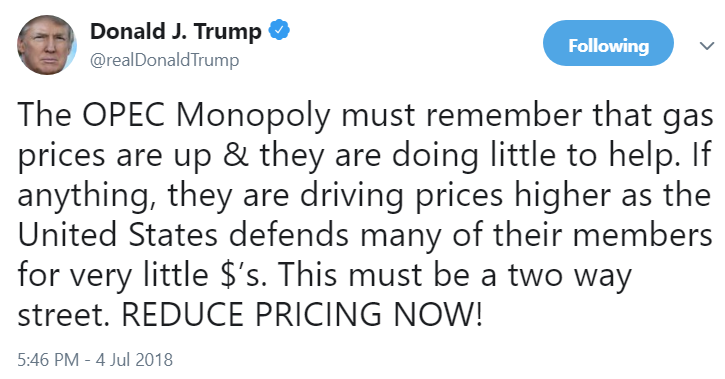
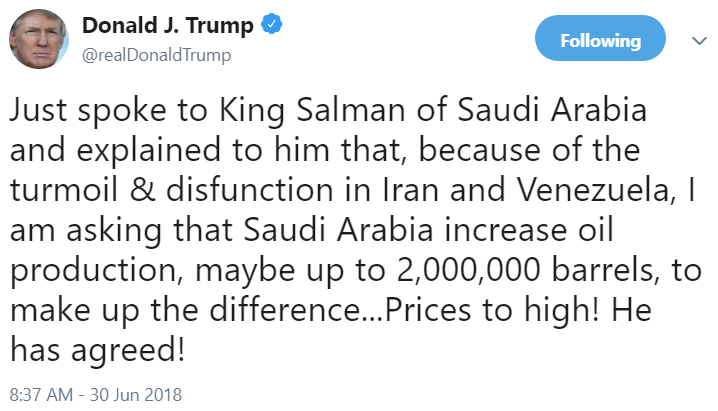
The endless oil match has been set and the pieces assembled. The supply/demand fundamental is the King of the chess board. All actions in the match are meant to protect or expose this piece, and the price of oil is determined off of it. A mere two months ago we were discussing how tight the oil market could get, after an expected loss in production. This quickly changed due to the Queen piece of the board, geopolitical issues. Geopolitical issues can move in any direction at any time, and can test all other fundamentals in the oil market. We last discussed geopolitical issues in our Check Back Soon blog series in July, but have lately seen a flurry of news involving two of the Rooks on the board, President Trump and Saudi Arabian Crown Prince Mohammad Bin Salman. After the suspected ordered murder of journalist Jamal Khashoggi, tensions have been high between the U.S. and the Kingdom. President Trump has not indicated any retribution towards the King, likely in an attempt to suppress oil prices. All the while, the U.S. has been issuing waivers to countries to use Iranian oil, which many previously believed would be cut off by sanctions. While there are many other back story Pawns at play here, the end result has been an increase in supply on the market versus what was expected.  In the days following the Khashoggi killing on October 2nd, oil has seen one of its’ quickest slumps ever, with WTI down 32% from over $72/bbl to $52/bbl (not to be confused with Trump mixing Brent and WTI in his tweet). At one point there were 12 straight days of falling prices. The match has turned in favor of President Trump and Americans seeking low oil prices.
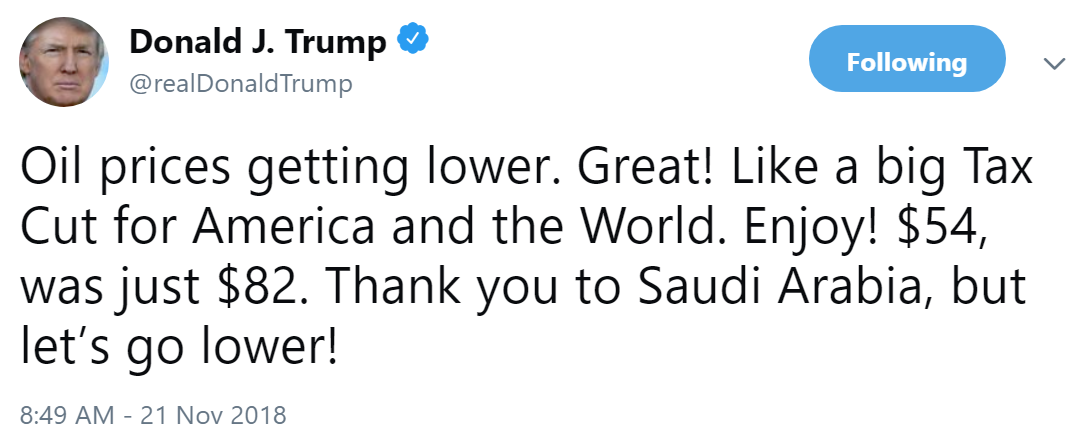
Two months ago, analysts were saying that oil could go to $100/bbl. Now there are analysts saying that we could fall back in to the $40 range. Factors affecting the outlook of oil prices include: Federal Reserve interest rate hikes (which strengthen the dollar, lowering the relative price of oil), a continued trade war with China (which hurts consumption), and lastly whether or not OPEC will announce a new round of production cuts.  All of these factors are set to be decided on in the next few weeks. If we see the bearish outcomes of all these factors, prices could fall further. A bullish correction is also possible given the volatile nature of these fundamentals. It will also be important to watch how American producers will fare with profitability in the long run with prices falling. Aside from oil, we have not seen a significant impact on the natural gas market. The Permian region is still increasing its production of oil, and associated natural gas is currently near capacity, with additional oil and gas pipelines coming online in 2019. This growth will help ensure the US maintains the power to control energy markets.
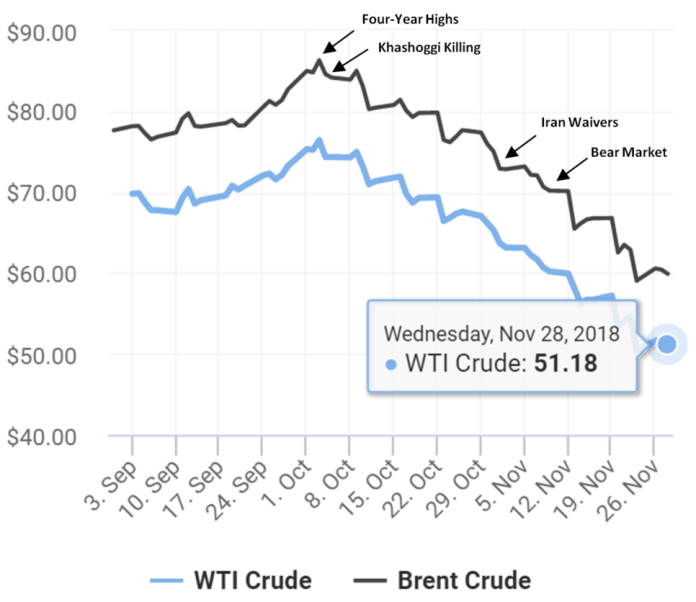
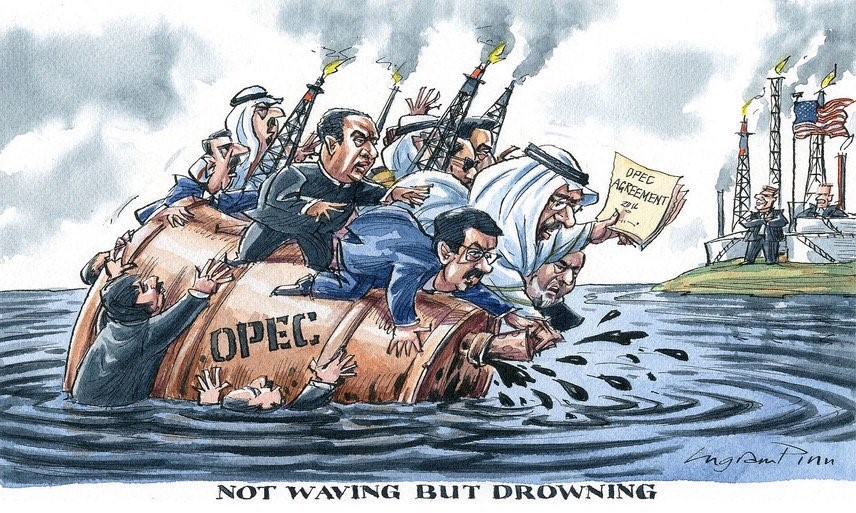
It is no secret that the price of oil has a huge impact on the world economy. However it is often understated how much of a rippling impact oil can have on many fronts in the energy market. It is not often that we discuss the oil market, but the recent 30% slump in prices was worthy of discussion today. The future impacts of this move are still speculative, but regardless we will continue to monitor the situation, and report on any implications this significant move may have for our clients.
Confidential: Choice Energy Services Retail, LP.
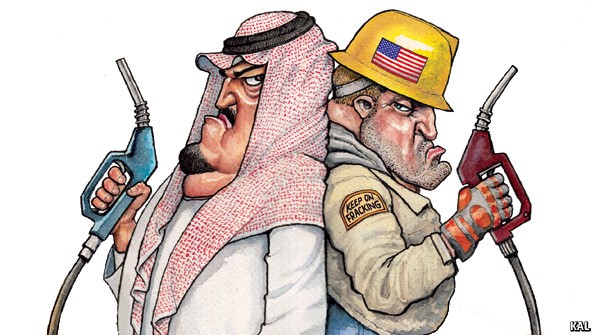

Check Back Soon Part III: Geopolitical Oil Fundamentals

By: Chris Amstutz

We have saved the broadest, yet most impactful, oil market discussion for part III of this blog series. The latest round of geopolitical news has made the oil market crystal ball less murky. The interactions between the countries of OPEC, Russia, China and the United States are tense, and oil prices are at the mercy of the discussions. The continued uncertainty and recent hypothetical outlooks add a strongly bullish argument for the price of oil, currently at $74/barrel (bbl) for WTI. Analysts are currently debating several fundamentals including; the physical capabilities of global spare production capacity, the politics of OPEC, implications of Iranian news and lastly, how negotiations from President Trump factor in.  While oil market volatility never ceases, this blog will provide the current geopolitical condition and the impact on oil prices.

The Situation

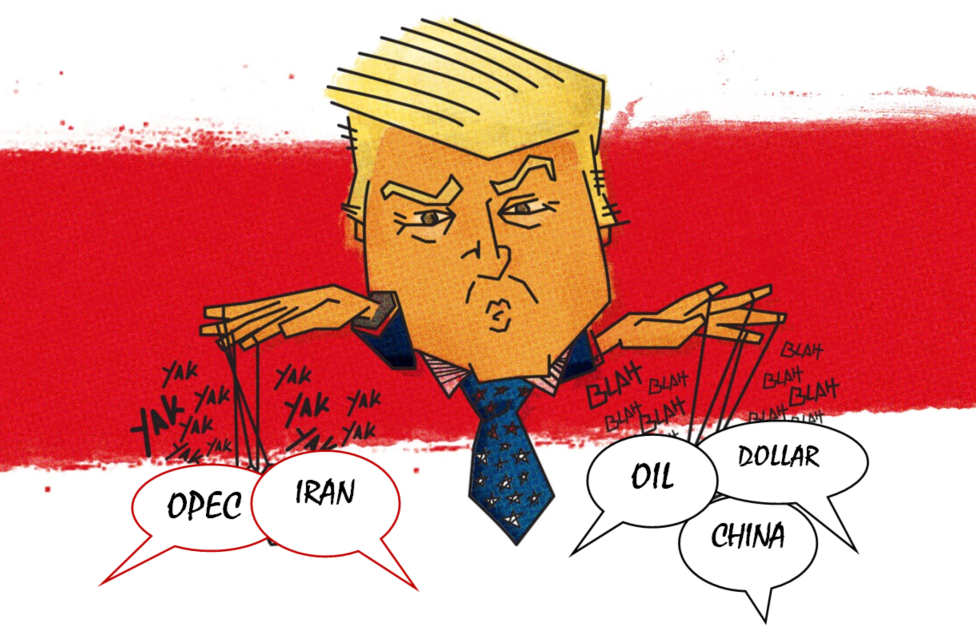
We last discussed the how global influences can affect natural gas and oil in our blog “Trade Wars: Energy in the Marionette Theatre”. The global market for oil is no less complicated and the chronological story centers on a few main factors.

Loss of Production

With the implementation of sanctions on Iran and Venezuela, it is estimated that global oil production has already fallen by 1.5 million bbls/day and could fall by another 1 to 3 million bbls/day by the end of 2018. This figure is dependent upon the rate of collapse in Venezuela, as well as the strength of participation globally in the Iranian oil embargo. Add to this the fact that OPEC was collectively trying to cut production in the first half of 2018. OPEC has since ceased production cuts, with Saudi Arabia producing 500,000 bbls/day more in June than in May.

Spare Production Uncertainty

Over the past two weeks we have seen President Trump tweeting about the oil markets and discussing the potential for production increases. It is estimated that Saudi Arabia is the only country with significant spare capacity, with the potential for an additional 2 million bbls/day. Russia is rumored to have an additional 500,000 bbls/day in spare capacity and all the other countries producing oil could potentially add another 500,000 bbls/day. The caveat is that all of this spare capacity is speculative, due to the physical uncertainties of pumping oil from the ground.

Immeasurable Geopolitical Impacts

Price shocks rarely come from anticipated events, but there have been clues recently.  President Trump is not the first US president to criticize OPEC, but he does seem to have leverage. Saudi Arabia is torn between their OPEC alliance and their new found alliance with the U.S. President and his ability to maintain the Iranian embargo. Saudi Arabia risks hurting OPEC cooperation in the long run by alienating Iran, for the sake of their financial benefit by appeasing the wishes of President Trump. Iran recognizes this situation and recently threatened a blockade of the Strait of Hormuz. This essential waterway would cut off 35% of the world’s oil (including Iran’s) and is a seen as a nuclear option for Iran (likely bringing armed confrontation) if all else fails.

Price Implications

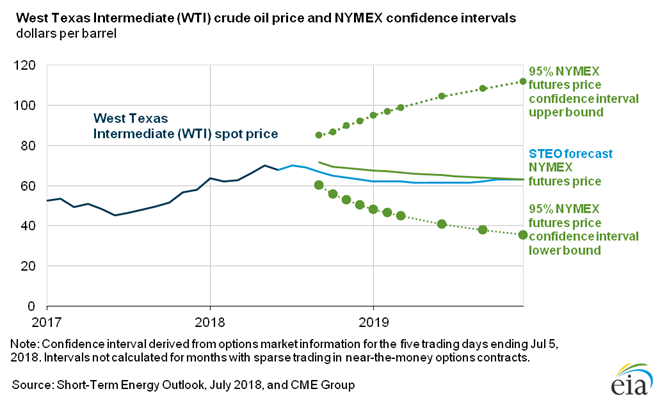
When discussing geopolitical influences on the price of oil, historically you haven’t needed a crystal ball to know that the risk has always been to the upside.  While this is currently a safe bet, it is also grounded in the facts and figures of the current market situation. If we continue to see increasing oil demand from the US and China, mixed with un-replaced, lost production from Venezuela and Iran, then we will certainly see prices increase. Any news about lower spare production capacity from OPEC will also bring prices higher. The final and most volatile factor in the equation is that any news or potential for armed conflict in the Middle East will bring oil prices higher. All of this risk is likely the reason why the futures market confidence intervals favors upside movement.

Confidential: Choice Energy Services Retail, LP.
Check Back Soon Part II: Permian Production Growth

By: Chris Amstutz

Certainly by now our consistent blog readers are picking up on the theme of relating random pop-culture topics to energy markets, and maybe to your delightful chagrin, this blog will be no different. Today we will continue discussing our latest series on oil market volatility and how Permian production growth fits in to the puzzle. It is well documented that the oil market goes through cycles and this seemingly endless circle has wide reaching effects for other energy markets.  What better way to describe the cyclical nature of oil markets, than with a comparison to the classic American cinema trilogy Back to the Future. The repetitively witty script is based on the premise that humans don’t really change, just their time era and setting. In the recent months the market has again become favorable for another timeless American cycle: Oil drilling in the West Texas Permian basin. No DeLorean needed, as we frame the past and present situation before getting Back to (discussing) the Future outlook for the world’s hottest oil play.

BACK IT UP

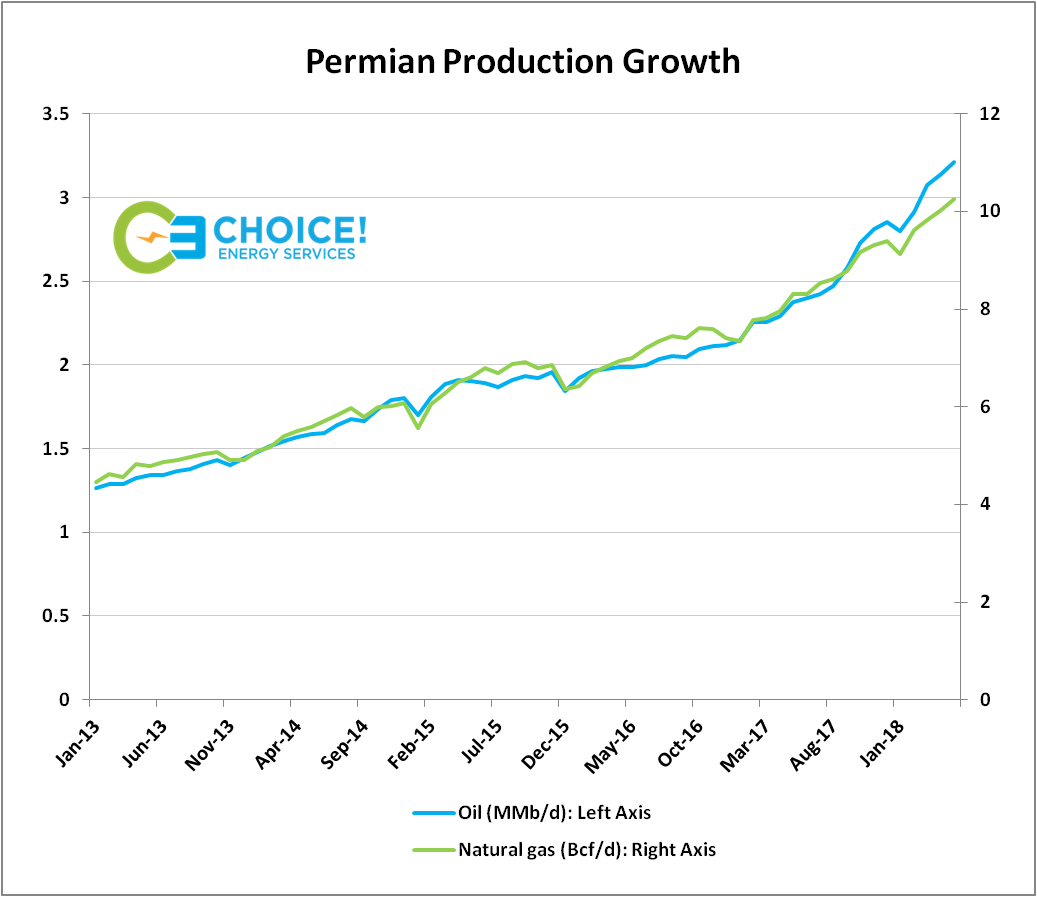
As discussed previously, the recent run up in Oil prices to the current mark of $75/bbl for Brent has caused increased attention and production in the Permian basin. Current output in the Permian is at 3.2 million barrels/day and the total output for the United States is expected to hit 11 million barrels/day by the end of 2018. This level of oil production has not been seen since the 1970’s to mid 1980’s (Back to the Future came out in theatres in 1985, coincidence… I think not). While many of the fundamentals have changed from that time period, the overarching theme of supply and demand affecting price and production are still what feed the cyclical oil markets today. Some analysts project production from the Permian to nearly double (~5 million b/d) in the coming years, which would make it the top producing basin in the world. This outlook has been made possible by a growing global demand for oil and a price level that supports American producers. The caveat to all of this positive news is that West Texas is experiencing intense growing pains. Pipelines out of the region for oil and natural gas have reached capacity and other methods of transportation must be explored. Regional demand has not grown fast enough and oil and gas is trading at a deep discount in West Texas. On April 23rd Waha hub gas traded at NYMEX (-) $1.40/MMBtu (half price) and the Midland oil hub to Cushing oil hub price differential is currently at a $9 discount. Can the region overcome its shortfalls in time before the next cyclical movement? Only Doc Brown and Choice Energy Services are worthy of a guess.

TO THE FUTURE

As long as the flying cars (and trains) that we were supposed to have by 2015 still use petroleum, the Permian can remain fruitful. Global demand for oil has topped 100 million b/d and is expected to grow every year by 1 million barrels/day.  The real question is how fast the region will be able to overcome the growing pains of transportation. The June issue of our Bulls and Bears report gave a more in depth analysis on the timeline of pipelines set to relieve the region. While producers have to wait at least 18 months for these new gas and oil pipelines to come online, shipping by rail and truck will account for most of the incremental takeaway capacity. It is estimated that an additional 40 thousand b/d could be transported by truck, and an additional 100 thousand b/d could be transported by rail.  This would still not be enough takeaway capacity, with the Permian averaging an increase of 70 thousand b/d, every month. Logistics aside, the region will be facing an oversupply situation and some analysts believe that the Midland oil hub to Cushing oil hub price differential could reach $20. This would certainly be a signal for production to slow, if global prices don’t send the signal before then. How Permian producers react and overcome this near term situation will affect oil market prices for years to come.

TIMELESS

The miraculous production growth in the Permian shale region has numerous implications for the oil markets, as well as other energy markets. The ability for American producers to export oil and influence its’ price on a global level carries tremendous geopolitical power. Additional natural gas recovered as an oil drilling by-product (associated gas), will continue to grow supply levels and keep domestic natural gas pricing depressed. The potentially positive influences from production growth in the Permian are numerous at this stage in the oil market cycle. So without the aid of a time machine, the analysts at Choice Energy Services will continue to monitor the fine details to better manage the risk of our clients.

Confidential: Choice Energy Services Retail, LP.