Choppy Waters: Power Market Volatility

By: Chris Amstutz

Businesses across the country are taking notice of the rapidly changing power generation mix. Is it simply due to the sight of wind and solar farms popping up along the highway? No, rather it is due to something more vital: their bottom line. From California, to Texas, to the Northeast, the impacts of an increase in power generation from renewable sources and a decline in coal-fired power are being felt. What lies on the river ahead? Recent news and pricing movements across the U.S. are showing signs of a straining grid, primed for increased volatility. Volatility presents opportunity in the energy industry and Choice Energy Management is working to remove the blindfold and safely guide your business to a stream of savings (a more enjoyable experience than re-watching Netflix’s “Birdbox” movie). Our first blog post of the roaring 20’s turns the rudder against the stream to dissect the current path for regional power market structures.
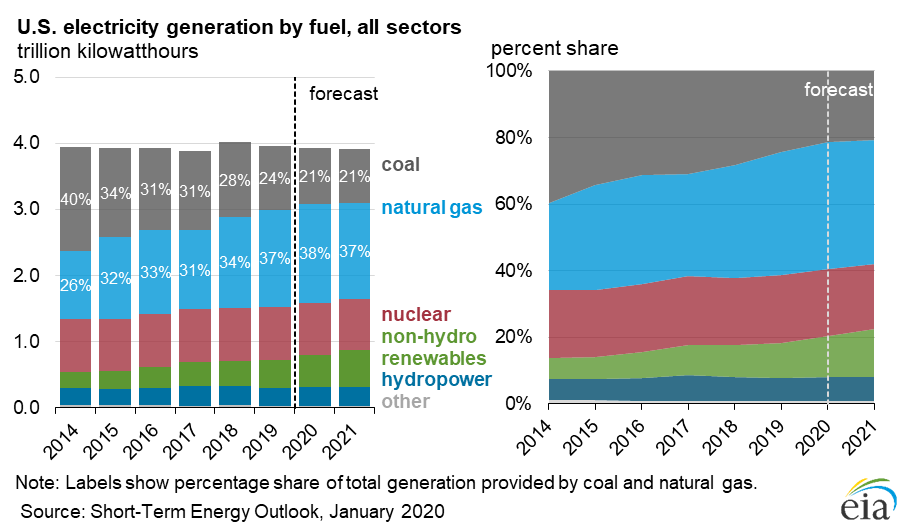
Nationally, we have seen a huge shift in the generation mix since 2014. While the chart above gives the breakout in terms of percentage change for each source of electricity, it does not fully tell the story for what is happening in power markets across the United States.  The introduction of intermittent electricity assets to the grid has posed new concerns and challenges that need to be addressed. More plainly speaking, when the wind doesn’t blow and the sun doesn’t shine, how will the electricity grid adapt to keep up with the power demands of end users. Without diverging down the deep, winding stream on the physics and technical nuances of power markets, here are the regions we are monitoring more closely for volatility in 2020:

CAISO: The push towards a Renewable Portfolio Standard for California of 50% by 2030 continues. The state legislature has remained hostile towards fossil fuel and nuclear generation assets. Many believe that the state government is challenging the grid too hard and too fast. The three main utilities (PG&E, SoCal Edison and SDG&E) are all pushing for rate hikes stemming from wildfire liabilities and the increased regional cost of natural gas. This market has already seen tremendous volatility, but tensions have calmed for now.

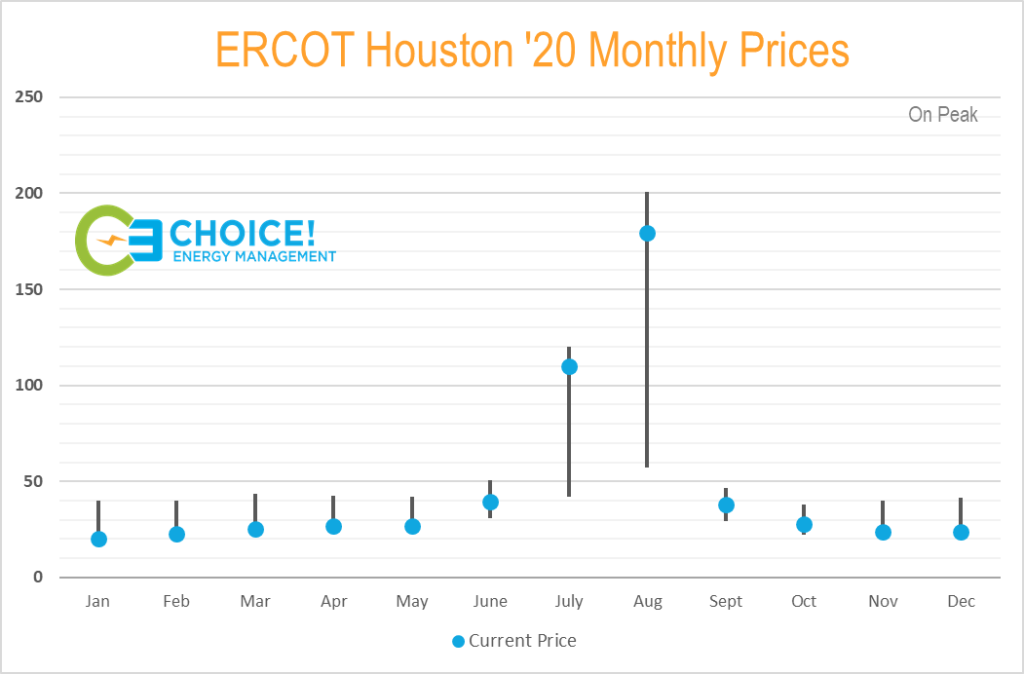
ERCOT: The latest report on Capacity, Demand and Reserves for ERCOT has projected a 10.5% reserve margin for summer 2020. The margin is projected to loosen to 15.2% and 13% in ’21 and ’22 respectively. Lost base-load generation from coal retirements has not fully been replaced by natural gas fired units. The renewable build-out has been substantial and is expected to grow to 15% of all generation utilized by the end of 2021. Low regional natural gas prices have created a scenario where power prices are near decade lows for all but the summer months. To entice new capacity, generators will need to be profitable in all months of the year, something that is hard, given the low prices 10 out of the 12 months (see below).
PJM: The current battle between the PJM regulators and the Federal Energy Regulatory Commission (FERC) over renewable energy subsidies distorting the market will likely not be solved soon. FERC’s latest order of expanding the Minimum Offer Price Rule (MOPR) aims to ensure competitive generation investment but may simply be an indictment of the flaws in the PJM forward capacity pricing structure.  The outcome of the expanded MOPR will likely beget more regulations from state legislatures, and PJM futures prices will be susceptible to the stroke of a pen.  

The depth of nuance affecting prices in region specific power markets is enough to make even the most avid energy blog connoisseurs head spin. The topics discussed in this blog warrant much deeper discussions than the individual paragraphs present. From 2014 to today, the soft trickling whisper generated from the impact of renewables has grown to a small but roaring stream. Time will tell how choppy the waters will get but there is no denying the potentially volatile effects of incorporating renewable energy into regional ISO’s. Until the day analyzing power markets becomes black and white, see what more Choice! can do to ensure smooth sailing.
Confidential: Choice Energy Services Retail, LP.


ERCOT Madness

By: Chris Amstutz

It’s that wild time of the year when work productivity tanks as people across America secretly watch their favorite college basketball team compete for glory in the NCAA Tournament. This sacred month for sports fans will be a roller coaster of expectations and emotions, just like this summer will be in the Texas power market. Price volatility has returned for the Electric Reliability Council of Texas (ERCOT). This summer represents uncharted waters for the ERCOT markets and will have implications affecting future summer pricing in Texas. Just as every NCAA Tournament has a unique cast of teams, this years’ Texas power market has a unique set of factors that are lending themselves to the madness. Let’s meet the teams vying for the right to call themselves the #1 price setting input:


#1 Seed: Power Reserve Margin

Team Bio: The difference between the expected peak power demand and total generation capacity (supply)

Resume: The recommended reserve margin is 13.75% but has fallen to 9.3% this year, strengthening its impact as a price influencer. The retirement of 4.2 gigawatts of coal-fired power announced in 2017 and delayed completion of natural gas and wind power projects has allowed for increased concern.

Intangibles:  Has the ability to make traders worry, without factoring in any other price influencers.

#2 Seed: Natural Gas

Team Bio: The NYMEX natural gas market price

Resume: The ERCOT market has traditionally been highly correlated to the NYMEX. The r-squared (direct correlation) between ERCOT Houston and NYMEX natural gas has been as high as 96% for a 90 day trading period. Natural gas prices have been falling which should lower ERCOT pricing.

Intangibles: An easy market indicator to watch. Natural gas pricing panics can influence the ERCOT market quickly.

#3 Seed: Weather

Team Bio: Drought conditions and short-term weather

Resume: The team that shows up to the tournament with the most potential to influence price, but could just as easily not show up at all. Texas summers are notoriously hot and cooling demand puts a huge strain on the ERCOT grid. Early drought conditions are fair and meteorologists are currently not concerned with long range summer forecasts.

Intangibles: The weather is a factor that can either become a huge problem during the tournament (summer), or it can quickly relax pricing tension. The weather is the main influence for short term price volatility.

 #4 Seed: Regulators

Team Bio: The Public Utilities Commission of Texas (PUC)

Resume: Intense debate between PUC members has arisen about what could/should happen this summer. These appointed officials are debating whether upward pricing spikes this summer balance the good of incentivizing utility investment with the bad of higher consumer prices. Their laws carry heavy market influence, but consensus seems to be that the market should be left alone heading in to the summer.

Intangibles: The ability to suggest laws regarding power prices can increase power pricing volatility on just talk alone

Results:

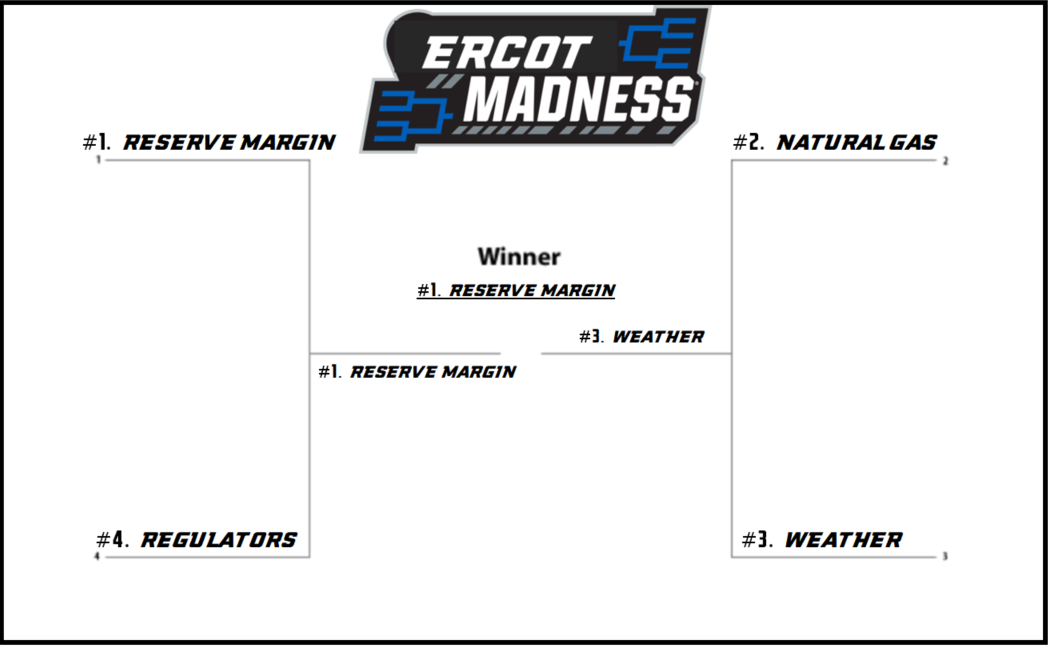
As you can see from the tournament bracket above, Choice Energy Services believes that the reserve margin will be the top influence on ERCOT prices this summer. Sure we picked “the #1 seed favorite” and while that may not always be the right move for your NCAA bracket, this is a clear choice. Prices have remained elevated in ERCOT since the announcement of coal generation retirements in October and fears have worsened since with the delay of wind/gas generation projects. The “regulators” in the PUC in Texas can do very little at this point in the year to try to help the 2018 ERCOT pricing situation, and all signs are pointing to a laissez-faire attitude from the committee. We have seen NYMEX natural gas prices fall in the last few months with the national influence of increased supply from the Marcellus/Utica region. Historically, this should have negatively affected ERCOT prices, but instead prices have risen. We still expect natural gas (and its falling futures prices) to have a long term bearish impact on ERCOT prices but it won’t be for this summer at least. The weather is a tough influencer to analyze. It could certainly have a huge influence on price this summer but we are not seeing clear enough signs yet. Texas just came off a historically normal winter and had near normal amounts of rainfall, despite contradicting La Niña conditions. We will get a much better picture of this summers’ weather the closer we get to summer, but there is too much volatility risk either way to try to hedge the weathers’ influence. As witnessed with the NCAA Tournament every year, picking winners and losers in a bracket is never easy. You can gather all the information and trends, like the analysts at Choice Energy Services, or you can pick teams based on their school mascot. Either way, you can rest easy during this fun time of year knowing we have your best energy interests at heart.

(Monmouth University bench circa 2016)

What Happened…A Market Review

By: Chris Amstutz

Last fall we witnessed Donald Trump accomplish the improbable by defeating Hillary Clinton in the US Presidential Election. This fall we have seen a surge in Texas power futures, and many are again left wondering, what happened? While the results of a US Presidential Election may be moderately more important (sarcasm), I assure you that such volatility in the top power consuming state should hardly go unaddressed.

First, we can address the outcome. Without any influence from the “rigged” Electoral College, Houston Hub Calendar 2018 On Peak pricing has risen.. big league. It is currently up 14.5% from the yearly low of $35.47 on July 24th to a two-year high of $40.64 on November 14th. The North Hub 2018 strip is up 26% in the same time period. The spike in these strips’ pricing has been brought on by huge premiums for the summer months. Houston Hub July and August prices are up 57.7% and 38.5% since the start of October trading. Either Texans are preparing their power-hungry Air Conditioners for a summer visit from the Heat Miser (Happy Holidays), or there are other factors at play here.

Plausible explanations for the spike are abundant. Is the rise in the calendar 2018 strip pricing yet another populist movement spurred on by the slogan of “Make Texas Great Again”? No, but parallels can be made to the election in that there is A LOT of uncertainty going forward for power prices in Texas. The first uncertainty is how bad the effects of this winters’ La Nina could be. La Nina typically brings warmer drier weather to Texas, and this could put a strain on the ERCOT grid come summer. Russian’s hacking our grid always has the potential to affect power prices, but the reality is that this rally has been brought on by scenarios that result in rolling black outs in Texas (insert alcohol consumption joke here). The expected 2018 summer generation reserve margin for ERCOT has dropped 2-3% below the targeted goal of 13.75%, due to recent coal-fired power plant closures. Texas is expected to shutter 5.1 Giga Watts worth of coal powered generation by early 2018. This generation is being replaced by wind energy, which could be problematic when there are windless high temperature days across the state. Yes, it would take near record temperatures, drought and a lack of wind generation to create this worst case scenario, but the market is pricing the possibility.

If there is anything to be learned from the 2016 Presidential Election, it is to never underestimate a risk. The ERCOT market has been presented with a plausible scenario that would skyrocket prices. For this reason, uncertainty will keep the price high. Upcoming decisions on coal plants will lessen the uncertainty but for now we are in a wait and see situation.

**The analysts at Choice Energy Services are equal opportunity political comics

Confidential: Choice Energy Services Retail, LP.