Up, Up and Away!

by Rory Fabian

Before the recent uptick in pricing of natural gas, we were seeing NYMEX at its lowest levels in YEARS. This was tremendous news for the end user because, as we know, electricity pricing will go down if Natural Gas is cheap, right? Well, natural gas, among other commodities, plays a big role in the price of electricity to the end user because much of the generation uses commodities as a fuel to generate electricity. However, actual energy has become (although still a large part) a smaller slice of the proverbial supply pie (see What’s This in My Supply Contract?). Some may look at their electricity bill in recent years and see that their price per kWh may be stagnant or even higher despite the recent low in commodity pricing.

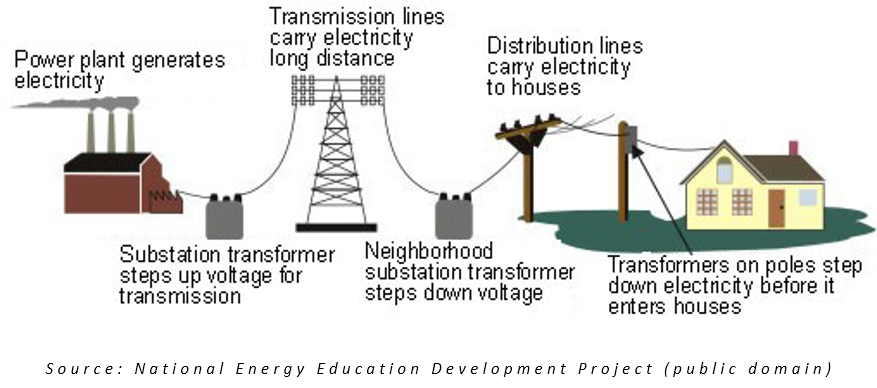
A major factor in electricity pricing has been the transmission and distribution portion of the bill. Transmission has to do with the handling of bulk transfer of power from generation facilities to local substations. From there distribution takes over in the form of local wiring between the substations and end user.
Generation

Transmission & Distribution

We hear over and over about our Nation’s infrastructure and how it is deteriorating. Our roads, bridges, tunnels, etc are in need up a major face lift. Well our electrical grid is in need of the same treatment. In PJM, there are plans in place for a major overhaul in Transmission systems to upgrade for reliability, efficiency, or performance standards. Not all of the cost, but some of the money that is dumped into these projects are passed along to the end user, of course – you may see this on your electricity bill, contract or letter from your supplier as NITS (Network Integration Transmission Service). Don’t expect these charges to decrease anytime soon, as many load zones have plans in place for additional upgrades in power lines beyond 2018.

Distribution is no different. Local utilities must ensure that their customers will have reliable systems for improved performance and stability. Overall, this will benefit the end user – I remember when Hurricane Sandy hit, I was without power for weeks. Hopefully, with the upgrades at the local level, the utilities will be able to ultimately cut costs and increase local reliability for the grid.

So, What Now?

Transmission and Distribution upgrades are a necessary function of the electricity grid just like upgrades to highways, bridges, and tunnels. So what can you do in the meantime to reduce transmission and distribution costs? Well, for commercial and industrial customers can reduce their bill through demand response or capacity management projects to reduce peak load. Managing of peak load will reduce strain on the grid and result in more $$ in your pocket.

Natural gas and overall commodity pricing is still one of the big, big driving factors in electricity pricing. However, due to structural improvements in the grid, we are seeing a stagnation or increase in $/kWh on our monthly bill.  Unless end-users take a look at energy management solutions or adjusting their internal systems, they shouldn’t be surprised if the electricity bill keeps going up, up and away.

Confidential: Choice Energy Services Retail, LP.

Git-R-Done vs Hurry-Up-and-Wait

by Rory Fabian

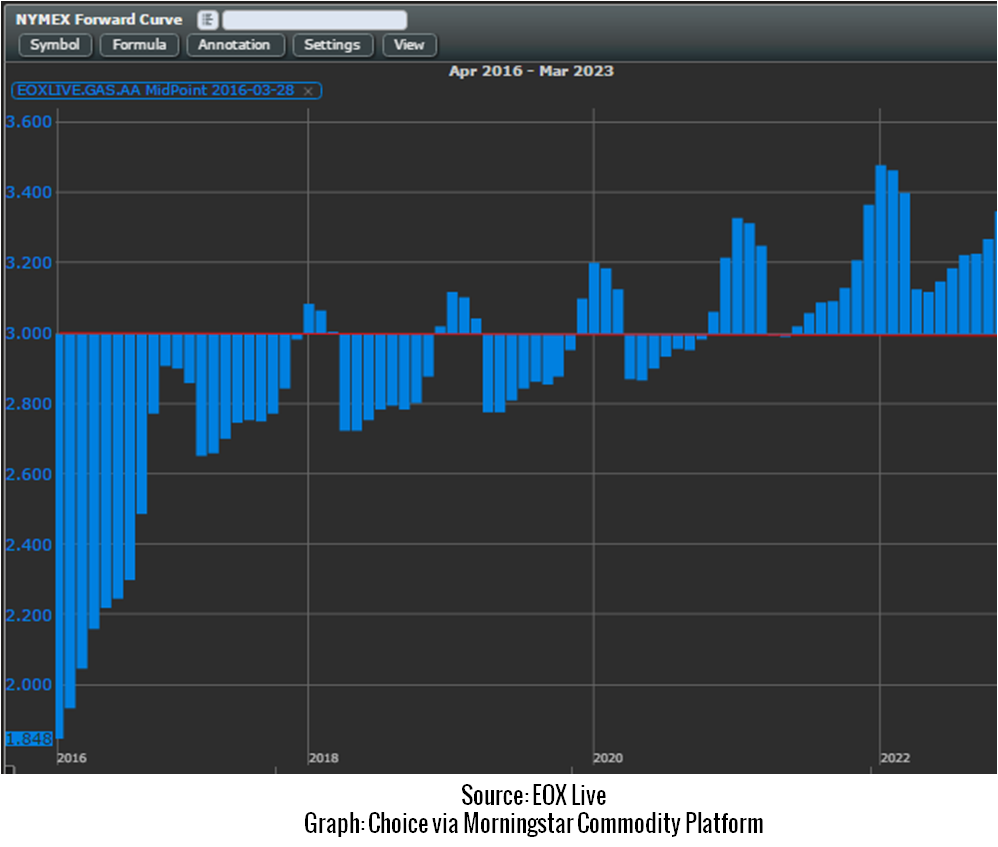
As if 2015 energy prices were not low enough, Q1 of 2016 has been defined by historic low energy pricing. Prompt month natural gas pricing has been trading below the $2.00/MMBtu mark since early February. The forward curve isn’t much better, as the NYMEX natural gas curve does not trade above $3.00/MMBtu till 2018! As Choice has discussed in other blog entries and white papers, the low pricing can be contributed to many factors such as: record production, STRONG storage levels, and bearish weather over the last couple of months. However, even with the low prices, for both prompt month gas and for the extended curve, reaction has been mixed by end-users. Many are excited about the opportunity and are locking up pricing for the long-term. Others are less than enthusiastic and are in no rush to secure their energy commodity price. Today, we will take a closer look at the two camps of clients – opposing mindsets – the “Git-R- Done” group and the “Hurry Up and Wait” crowd.

NYMEX Forward Curve


“Git-R-Done”

GitRDone

Prompt natural gas pricing is below $2.00/MMBtu and the rest of the curve is flatter than Rickie Fowler’s hat!  To put in perspective, the forward curve hasn’t been this low since you thought dial up internet was the greatest thing in the world (You Got Mail).  As a result, many end-users are locking their commodity prices now and locking it long-term. While there is a chance that pricing may go even lower, end-users in the “Git-R-Done” bucket are taking the risk off the table now instead of waiting to try find the bottom of the market.

The “Git-R-Done” group also realizes that pricing at these levels will not last forever. It didn’t take long for the market to rebound in 2012 when prompt month gas dropped below $2.00/MMBtu, and it could happen quickly again. Bullish movers such as natural gas exports (LNG and Mexico), declining rig counts, and a potential for a hot summer all have the ability to bring the supply/demand picture back in balance for natural gas. With end-users now seeing drastic savings over their previous energy contract, the “Git-R-Done” crowd wants to strike now.

“Hurry Up and Wait”

HurryUpandWait

The second camp is the “Hurry Up and Wait” sector.  They are well aware that natural gas has been trading below $2.00/MMBtu since early February, but lower energy prices are becoming old news. They were told the prices in 2015 were low, when the market was consistently below $3.00/MMBtu and traded range bound the entire year. Pricing in 2016 has only dropped further from the “low” 2015 price levels so why should end-users lock now.

Additionally, there is no shortage of bearish news in the market. Storage levels are at record levels with the potential to break storage capacity levels at the end of injection season. Weather has been bearish all year with warmer than normal temperatures in the North, and mild temperatures in Texas. And even though the natural gas market is dealing with depleting rig counts and decreased associated gas from oil, production levels have remained at historic high levels.  Record production has been buoyed by an increased drilling efficiency, especially in the Marcellus Shale gas play. With so much bearish news-what’s the hurry?

Conclusion

What is the correct move here – “Hurry Up and Wait” or “Git-R-Done”?  It depends on the goal of the end-user. If the goal is to get the lowest price possible, then we will have to wait till the end of the year to see which group was correct in 2016. However, with many end-users (especially many of our clients) wanting budget certainty while obtaining contract over contract savings, the “Git-R-Done” crowd is gaining strong momentum.


Confidential: Choice Energy Services Retail, LP.