Check Back Soon: Oil Market Volatility

By: Chris Amstutz

Many analysts in the energy industry try to make a living by attempting to forecast the next big macro shift in oil prices. The truth of the matter is that nobody can fully anticipate movements in oil prices, not in this geopolitical environment, not with Trump as our President. Just when an analyst thinks they have completed the puzzle, the global market influences scramble and add in more pieces. OPEC decisions, sanctions on Iran, and Permian oilfield growth are a few topics worth discussing for current events but even these influencers change daily. If you need more proof as to the fallibility of a predictive analyst, just know that we are coming up on the 10th anniversary of the “Peak Oil” scare. Many analysts predicted that by 2018 global oil production would be drastically cut to 50 million barrels/day, but instead we have increased global production by nearly 15% to 100 million barrels/day.  So where is oil going next, and how will energy prices be affected!? We won’t guess, but today we will start a multi-part blog series, briefly introducing the topics that keep oil market analysts on their toes.

Iran Deal Termination:

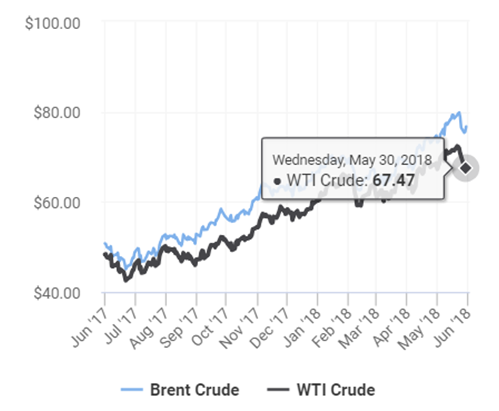
On May 8th President Trump announced that the US would be ending its’ involvement in the Iran deal, and reinstating the “heaviest” of economic sanctions on the nation. These sanctions will impact nearly every industry in Iran and will hit in August 2018. Since the Iran deal began in 2016, Iran has been able to increase their oil production from 2.9 to 3.8 million barrels per day (EIA). Almost half of this production growth is now expected to be lost. As a result of the news, WTI Crude prices pushed over the $70 mark.

OPEC Production Re-evaluation:

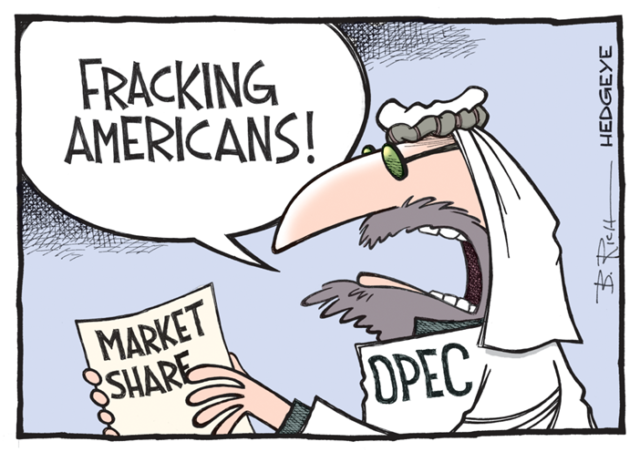
Since December 2017, OPEC has succeeded in lowering their collective production output. Consensus was that OPEC was re-balancing the market to reach a desired $70/bbl price. With the news on Iran, mixed with continued collapse in Venezuelan production, we are likely to see a shift in policy. This expectation has likely allowed Oil prices to come back down off their recent highs. OPEC cannot risk losing market share to growing American producers and this will likely put a lid on prices in the short run.
 American Production Growth:

We have seen huge growth from American oil producers in the last several months. The increasing price of oil is likely the cause, and confirms the market share fears that OPEC has with American fracking producers. We have seen the EIA’s estimates for 2018 production climb to 10.722 MMb/d,a 1.37 MMb/d increase over 2017. The projections for 2019 are even more impressive at 11.58 MMb/d. It is important to note that these are only projections and are certainly susceptible to a different puzzle of micro/macro influences, such as pipeline constraints from the Permian basin. If forecasts are proven true, this production growth should help offset any bullish news that arises from other influencers.

After touching on a few of these current events, you can see the complexity in the oil market puzzle. It is all too easy to remain on the fence when trying to decipher the outcome in commodity markets. Luckily, retroactively criticizing the bold “Peak Oil” predictors is only what we do for fun at Choice Energy Services! Our analysts often write about and discuss where they believe oil, natural gas and electricity market prices are heading. These opinions are based in facts and data that can be seen in our market intelligence reports. Whether you are looking for detailed analysis like the Bulls and Bears report, or whether you simply enjoy mediocre, political cartoon-oriented blog pieces, Choice Energy Services has you covered on the latest oil market fundamentals. Check back soon for the next news worthy installment of our Oil market blog series.
 

Trade Wars: Energy in the Marionette Theatre

By: Chris Amstutz

Puppet Master: (Noun) “A person, group, or country that covertly controls another”

The weird thing about having such an unreserved President in office has been the rather predictable, unpredictability. One day we hear about alleged affairs with porn stars, but we know it will quickly be forgotten the next day when North Korea pledges to denuclearize. News cycles today run 24/7 and “politics aside” (like honestly; not the cliché use of the term that your uncle uses before he’s about to go on a highly opinionated Facebook rant), everyone can admit that President Trump has been “pulling the strings” of conversations on a domestic and global level. One of the most heavily covered topics of 2018 so far has been President Trump’s aims at shaking up the global landscape for trade. In the State of the Union address, President Trump stated that, “We have ended the war on American energy”, but certain policies and actions could cripple American energy growth domestically and globally.  We recently covered this topic more in depth in our last Bulls and Bears Report, and today we will continue to critique Trump’s predictably, unpredictable puppet show and how it could affect domestic energy consumers.

In early March, the Trump Administration placed a tariff on imported steel and aluminum from certain countries. Placing tariffs on the individual puppet items from foreign countries may seem like a patriotic thing to do (reference a truly America-first politician here), but in reality the physical ramifications could end up hurting American energy consumers. Domestically, the 25% tariff placed on steel has huge implications for nearly every stage of the energy industry’s processes. Producers will have to factor in higher costs for well construction, which begin the process of capturing the vast reserves of oil and gas that the US has. The specialty-order steel pipelines, that are currently only made in China, could cause serious delays or even cancellations of the pipelines the US is lacking. Also, we would almost certainly see a 5-10% increase in construction costs for heavily steel dependent LNG exportation facilities.  These are but a few of the foreseeable domestic impacts that would come from a steel tariff, and Trump’s tariff would likely not end there.

 Globally, the implications are harder to measure, but trade talks and deals serve as the stage in which Trump plays his show.  You can boil global trade implications down to the fact that if American energy producers are “winning”, Americans are “winning”. The US is currently the top producing gas and oil country, and production growth estimates have risen by nearly 10% over the last year. This has given the US the potential to compete against OPEC and Russia for more market share on the global stage. The enormous potential for the US to supply gas and oil to countries like China and Mexico makes the current trade war talks especially troubling. Tensions have eased recently with China and we may soon see a NAFTA 2.0, but as we have discussed, the situation is still predictably unpredictable. Any deals that hinder American energy investment and growth in these markets would disincentivize domestic production.

So how could energy prices react to all of these happenings and potential situations? This answer is as complex as global trade itself. Domestically, the tariff increasing steel costs would mean that we could see higher costs to move gas, oil and electricity, and potentially higher prices. At the same time, higher LNG facility construction costs would discourage new export facilities, which would keep more gas stateside, in turn depressing natural gas and power prices in the short run. While this is just a small simplified picture of the complex domestic market movements, the implications would obviously be much clearer and more devastating if China or other countries placed a tariff on American energy.  While the outcome of a trade war situation is not completely known, the analysts at Choice Energy Services will continue to monitor the situation to better help our clients hedge against potentially volatile price impacts. Cheers to 2.5 more years of predictable unpredictability.


Confidential: Choice Energy Services Retail, LP.

House of Cards Season 4 is Great, Although Wrong on Energy Markets

by Matthew Mattingly

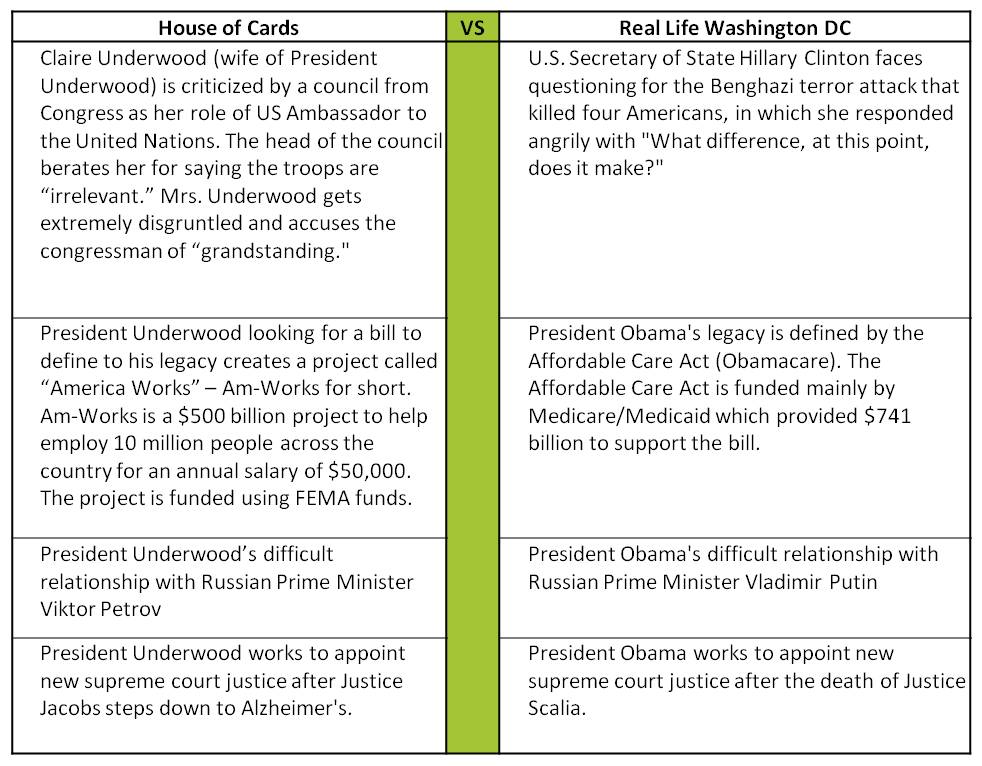
If you are one of the 30 million domestic subscribers to Netflix (or one that just steals your friend’s login credentials) then there is a good chance that you have watched the television series House of Cards. The fictional, political drama describes the life of Frank Underwood (played by Kevin Spacey) as he ruthlessly develops a plan to gain power within Washington DC. The beauty of the show is how it addresses issues that are affecting politics in present day, even being prophetic by foreseeing topics facing Washington after the show has already been filmed. Examples include….

WARNING: SPOILER ALERT
House of cards table

WARNING: SEASON 4 SPOILER ALERT

Season 4 of House of Cards was released this past Friday and many loyal watchers probably binged watched the entire season over the weekend. I am not going to lie; I already knocked out three episodes myself and looking forward to watching the rest of the season. However, I was disappointed in Episode 3.  Not that it wasn’t entertaining (the Underwoods are as vindictive as ever), but the show missed the mark on America’s current energy position.

In summary, Season 4, episode 3 discusses an oil crisis that is affecting the United States. The crisis is a result of Russia cutting oil exports to get revenge on the Unites States. With less Russian oil available in the world market, the price of oil explodes. Oil pricing moves to over $150/Bbl, gas at the pump is over $6.00/gallon, and shortages occur throughout the United States like its 1973 all over again.  This sets up yet another obstacle that Frank Underwood has to overcome in his presidency and worse yet, it’s an election year.

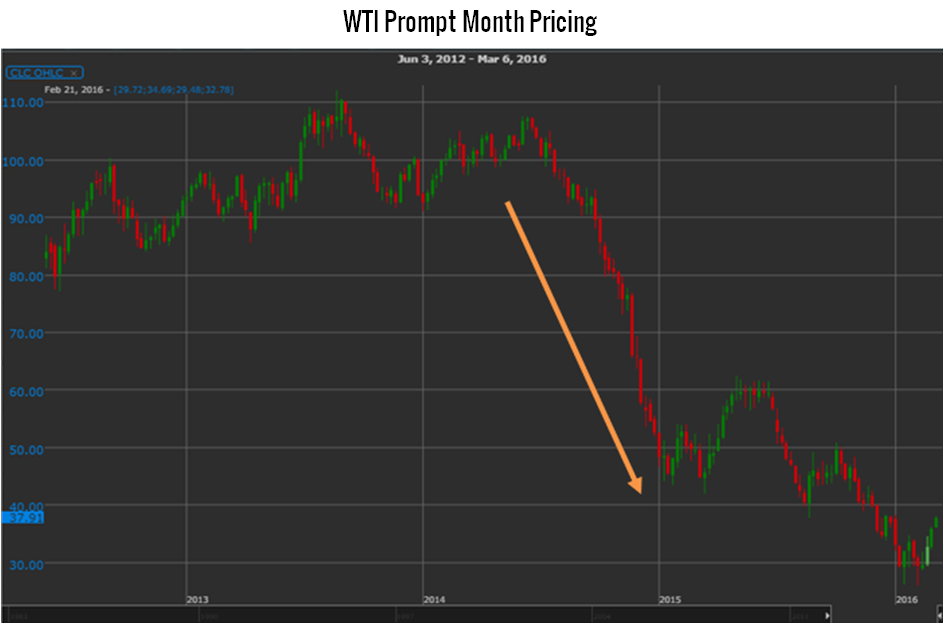
As usual, this makes for a riveting storyline, and allows more screen time for Petrov (great actor/character by the way), but how likely is it events like this could actually happen? Extremely unlikely, and here’s why: The United States is swimming in oil and natural gas right now! The fracking revolution has nearly doubled production in the United States making others oil producing countries find a new home for their exports. Since the last half of 2014, simple economics of supply & demand have crashed oil prices (House of Cards Season 4 began filming in June 2015) trading as low $30 US/Bbl at the beginning of 2016. Even with the oil market going through a “rally” this past week on the news of potential OPEC freezes, prompt month oil is still having trouble breaking through the $40/Bbl resistance level.

WTI Prompt Month Pricing

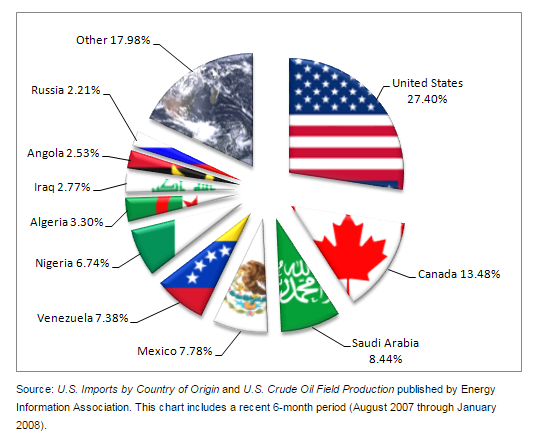
Another issue with the House of Cards storyline is the theory that United States depends heavily on Russia oil. Granted Russia is the world’s largest oil producer, but they are mainly exporting oil to Europe and China, not the United States.  In fact, even before the fracking revolution started the United States received very little oil from Russia. The pie graph below illustrates the small percentage of oil that Unites States received from Russia during 2007 and 2008 time period. With little reliance on Russian oil a cut in exports would have a minimum impact on United States oil prices, and would more than likely lead to a larger spread between WTI and Brent oil prices.

US Imports by Country of Origin and US Crude Oil Field Production

Finally, the oil market, specifically the US benchmark WTI market, has a ceiling in regards to price. With so much US oil supply available in shale plays, combined with the quick turnaround for producers to get supply to the market; it would be nearly impossible for $150/Bbl to occur. US producers are ready to increase their exploratory rigs counts at $50/Bbl, could you imagine how many rigs would be in the ground at $150/Bbl?

House of Cards is a very entertaining show that does a great job of bringing the dark side of Washington DC into your living room. What has been fascinating over the years is how the shows parallel itself with current headlines facing the US capital. That is why it was a little frustrating watching Season 4, Episode 3 as it missed the mark on America’s current energy position. Even with this flaw, I definitely recommend watching the show. It was just too hard for an energy analyst to watch Episode 3 and not comment on it.

Confidential: Choice Energy Services Retail, LP.