Everyone Is an Energy Expert… So They Think

By: Matthew Mattingly

123

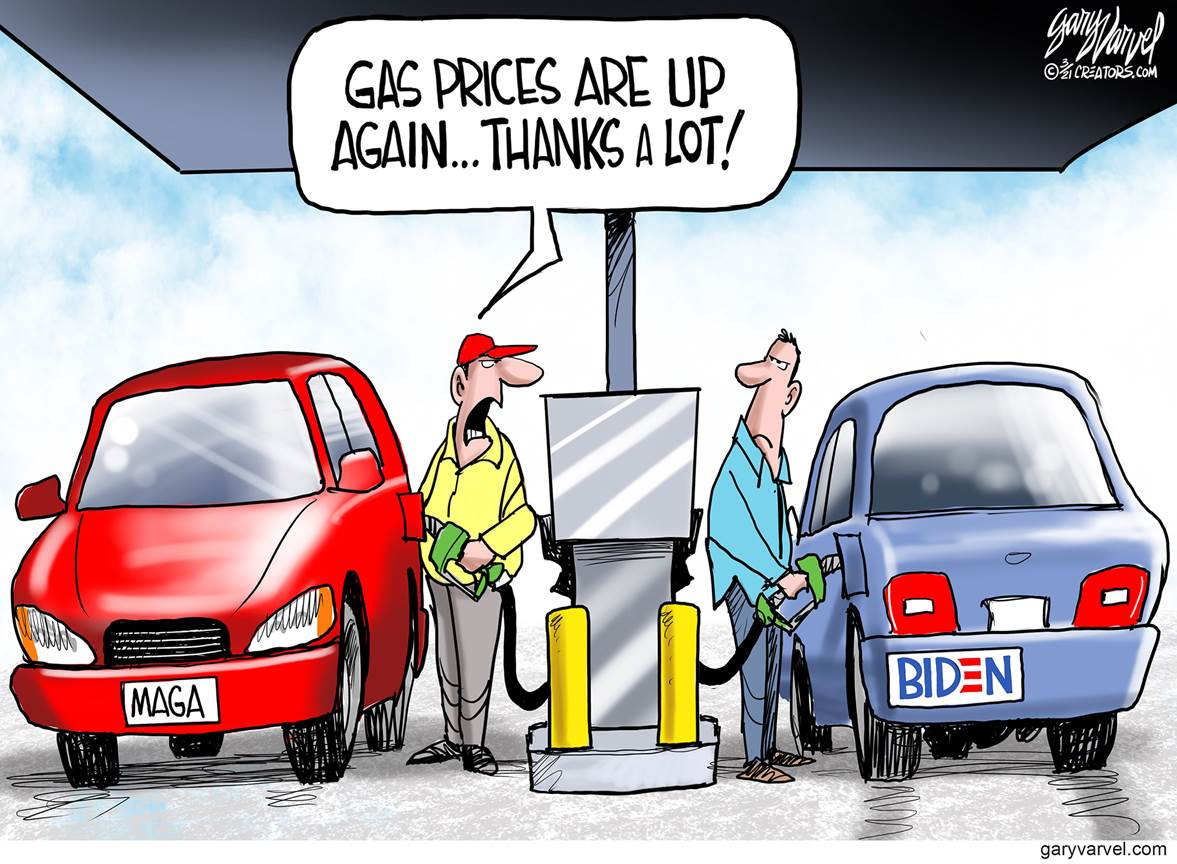
Everyone seems to have strong opinions on the high energy prices impacting our country (and the rest of the world).  Record high prices at the pump, coinciding with historically high prices for all fossil fuels have more people talking about energy supply and demand than I can ever remember. I’ve worked in the industry for over 15 years, but now can’t escape the conversation at a cookout, grocery store, or even my kid’s baseball games. I’ve heard it all; from blaming it all on Biden, to “Big Oil” price gauging (remember they make more money than God himself). Unfortunately, all of this conversation has allowed a lot of incorrect information and misleading data to be spread. The intel is often provided by extremely intelligent people. However, with countless market fundamentals to follow and technical trading patterns to evaluate, it’s difficult for those outside the industry to get the full picture of the energy landscape. Today we will discuss and respond to some of the bad energy takes from Twitter we have recently seen by two sports radio hosts from opposite sides of the political aisle.

123

Twitter Name/Handle, Example 1:  Matt Jones (@kysportsradio)

Background:  Best known as sports radio host and founder of Kentucky Sports Radio. Matt Jones is unlike the customary sports talk jock. His credentials include: being a graduate from Duke University School of Law, authoring a NY Times Best Seller, Mitch, Please!, and an interest in running for US Senate against Mitch McConnell. I personally follow Matt Jones on Twitter because of my love of University of Kentucky athletics and other daily evaluations living in my home state of Kentucky.  

Matt Jones’ Twitter Page

Matt Jones’ Tweet: “But I don’t think there is anything our government can do about it (high gasoline prices). We are totally dependent on Foreign Oil.”

Unless you count Mexico and Canada as “foreign oil”, the U.S. is not totally dependent. The U.S. is the largest oil producer in the world and the gap widens when you include all petroleum products (propane, ethane, gasoline, natural gas, etc). The U.S. gained that title in 2018, and oil production peaked in 2019 at 12.25 million barrels per day.  While the U.S. does receive crude oil imports, 72% of it comes from North American countries.  In the context of talking about Russia and OPEC for our government’s energy policy, we are not dependent upon their oil. Taking it one step further, reducing regulations and bureaucracy in the U.S. would bring more drilling & refineries that would lessen our ties to global prices. There absolutely is something our government could have done and still can do to prevent high energy prices.

123

Matt Jones’ Tweet: “Most individual consumption (oil) come from overseas. We save most of the domestic (oil) for industrial needs.” 

This tweet appears to be contradictory. The crude oil market consists of numerous grades of crude oil that vary by weight and sulfur content. Crude with lower sulfur is referred to as sweet, while higher sulfur content is considered sour. The U.S. oil reserves typically produces light-sweet crude oil, which can go to any refinery, and is used mostly for gasoline. While sour crudes (imported from Canada, Russia, and others) produce heavier distillate products, such as diesel and jet fuel, which would be used more for industrial needs. There has not been a refinery built in the U.S. since the 1970’s and many of these refineries are built to take in sour crude. However, the categories on how we can use this oil are not as defined as what the tweet leads readers to believe.

123

Matt Jones’ Tweet : “The same amount of oil is being produced as the Trump era.  That’s not the reason that prices have gone up.”

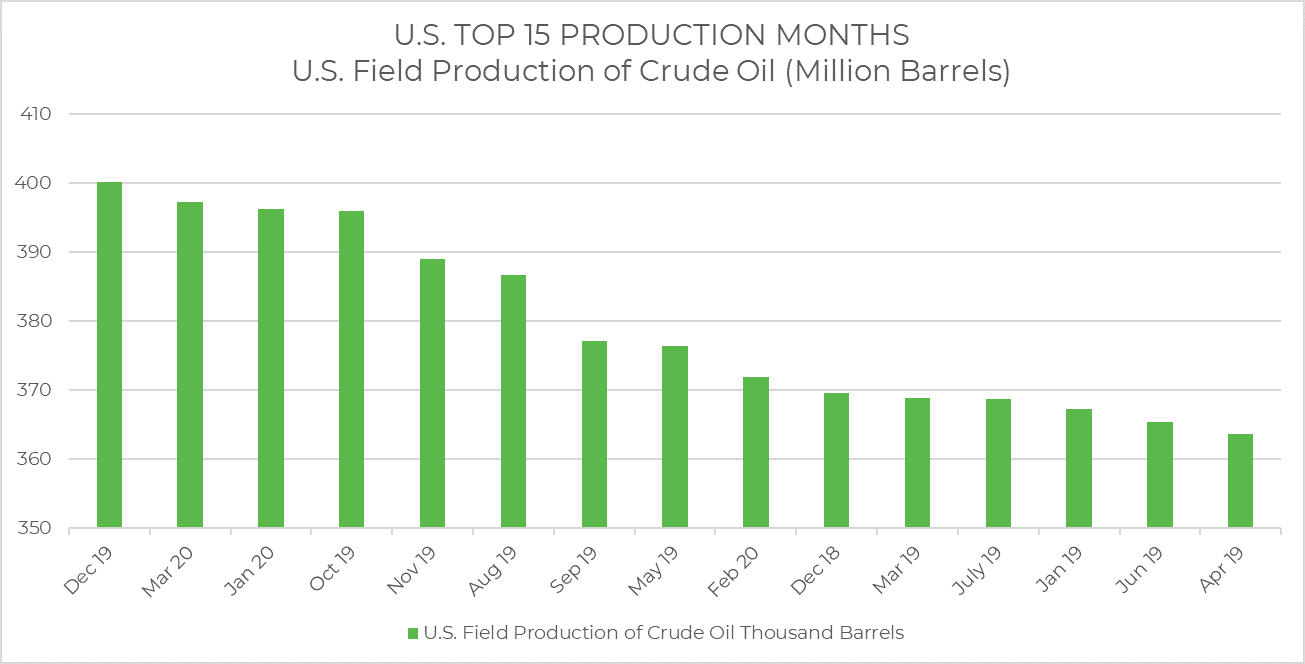
This discussion point is seen a lot, but this is a half-truth. Yes, the U.S. is currently producing as much oil as the final year of Trump’s presidency, but that was during the peak of the pandemic, when demand plummeted and producers shut down wells. The United States’ top 10 oil producing months all occurred during Trump’s presidency as shown in the graph below, peaking in December 2019 at 400,000,000 barrels for the month. The additional 35+ million barrels per month would greatly impact today’s oil market.
123

Twitter Name/Handle, Example 2:  Clay Travis (@ClayTravis)

Background:  Clay Travis is another lawyer turned radio host, although that might be his only similarities to Matt Jones. Clay received a law degree from Vanderbilt University, but quickly moved to a career in sports with a radio show and the founding of Outkick the Coverage. Currently, Clay is a political commentator on The Clay Travis and Buck Sexton Show, a conservative talk show that replaced Rush Limbaugh. His book, Dixieland Delight, is a must read for SEC football fans like myself, although his love for the low down, dirty Tennessee Volunteers is not his most redeeming trait. 

Clay Travis Twitter Page

Clay Travis’ Tweet: “Gas has officially passed $5 gallon, an all-time high that acts as a default tax to the poorest Americans, and prices show no signs of coming days any time soon. Joe Biden is the worst president in modern American history, maybe ever.”

Many Democrats simply blame Putin for the rise in oil prices, which is not accurate.  Likewise, conservatives like Clay Travis like to incorrectly place ALL of the oil price impacts on President Biden. This was recently discussed by Chris Amstutz in his blog called Shoot Me Straight: Is Biden Wrecking Energy Markets,  which discussed the numerous market fundamentals and events that have caused the strong increase in energy prices.  As Chris pointed out in the blog entry:

“The truth is, oil, natural gas, and electricity prices began rising in the summer of 2021 to now (up over 100% year over year), due to chronic underinvestment in the energy industry. COVID-19 lockdowns destroyed demand for hydrocarbons, leading to some of the biggest financial losses in the history of American petroleum. The White House now claims that these same companies are gouging Americans, ignoring the need for producers to show a financial return to investors who also lost heavily in 2020-2021. This, coupled with policies that have inhibited domestic pipeline growth and drilling, has added to the global energy shortages we see today.”

Clay Travis Tweet : “Last night’s @seanhannity hit with @GeraldoRivera debating Biden’s plan for high gas prices. Enjoy:

Video: 4:54 Mark…Sean Hannity “He (Biden) was handed energy independence…”

The term “energy independence” is used often, and is something that every U.S. presidential candidate has promised for the last 50 years (as well as stating that this is most important election of my lifetime 😊). However, the term is sort of a misnomer in that the U.S. does not have the infrastructure in place to halt imports completely from other countries and act “independent”. Pipelines, refineries, and economic/political policy have led to our current situation. The blame of high energy prices cannot and should not ever fully fall on a sitting President, due to decades of planning and building in this industry. The U.S. is a “net exporter” of petroleum, but this simply means the value of petroleum we export exceeds the value of what we import. Estimates are that the U.S. uses roughly 18.1 million oil equivalent barrels/day of petroleum, and we produced 18.4 million. How and where these barrels get used, and what part of the world they come from is a much deeper rabbit hole that cannot be condensed into a sports talk show or energy market blog.

123

Conclusion:

As these examples clearly show, two well-educated people have a hard time of getting all the facts straight when discussing energy fundamentals. It’s nearly impossible for anyone outside the industry to keep up with countless, evolving fundamentals that aren’t limited to: storage, weather, rig counts, geopolitics, frac spreads, and U.S. vs. global demand. This is exactly how GETCHOICE! assists our clients. Through market calls, white papers, and market presentations our Risk Management team ensures our clients have the market intelligence to navigate the energy landscape and make educated purchasing decisions. Contact us or your GETCHOICE! Client Advisor to find out more details about our Strategic Procurement and Risk Management services.  As for Matt Jones and Clay Travis, I don’t want to be the guy that tells them to “stick to sports” but I sure wouldn’t recommend taking their energy advice.  
Shoot Me Straight: Is Biden Wrecking Energy Markets?

By: Chris Amstutz

We regret to inform you; the politicians are back at it again. We have commented on politics in energy numerous times in the past, and today we look to address the volley of energy headlines that have come out in recent weeks. Like every topic, there is nuance and gray area that is difficult to explain to those outside the energy industry. Today we start a new blog series to address ongoing questions from popular headlines in the industry. GETCHOICE! has decades of combined energy experience, and like a cowboy in the wild west of the energy industry, we always shoot you straight. Here are some of the recent headlines with additional nuance discussed.

Will Biden’s Strategic Petroleum Reserve (SPR) Release Lower Gasoline Prices?

This article reports that the White House predicts gasoline prices to fall 10-30 cents per gallon on the announcement that 180 million barrels of oil would be released for U.S. consumption. SPR releases have had mixed results in the past and it is difficult to say what the final outcome for this will be. The visible outcome thus far, is that the market has lowered WTI oil price futures for the next 6 months, but increased prices beyond that point (see chart below). This is due to producers adapting their production outputs lower in the long run due to lower profit margins in the short run. So all in all, the more complicated answer is that politicians can marginally adjust oil and natural gas prices in the short run but these policies have rippling, unintended consequences in the future. Upward price movements, like what we have seen in the last 6 months, ultimately are tied to long term fundamentals of supply and demand against the back drop of industry trends.

Has the U.S. given up on the Green Energy transition?

This article discusses the “reluctance of President Biden to unleash clean energy rhetoric”. Green energy topics do not typically poll well when energy prices are high (hence the President’s reluctance), but many U.S. and European politicians believe that high prices are the catalyst to increasing renewable energy sources on the grid. The reality is that the U.S. is still not close to a macro, nationwide green future due to the sheer scale in technology required to change the current system. However, micro, individual business level green-initiatives are becoming more popular due to the ability to save money on utilities. GETCHOICE!’s utility bill management  platform GET: Smart Management Technology (formerly Choice! Data Connect), allows businesses to benchmark usage, track Scope 2 & 3 carbon emissions, and quantify savings from these green initiatives at the site level. This trend will grow due to high energy prices and the need for increased cost efficiencies.

Are Oil, Natural Gas, and Electricity Prices Increasing Because of Vladimir Putin?

The White House recently published this fact sheet, addressing “Putin’s price hike at the pump”. While it is easy and convenient to blame high energy prices on the Russian invasion of Ukraine, it is but a small factor in the energy market price increase, and should not be used as a meaningful procurement strategy. The truth is, oil, natural gas, and electricity prices began rising in the summer of 2021 to now (up over 100% year over year), due to chronic underinvestment in the energy industry. COVID-19 lockdowns destroyed demand for hydrocarbons, leading to some of the biggest financial losses in the history of American petroleum. The White House now claims that these same companies are gouging Americans, ignoring the need for producers to show a financial return to investors who also lost heavily in 2020-2021. This, coupled with policies that have inhibited domestic pipeline growth and drilling, has added to the global energy shortages we see today. In all reality, Vladimir Putin likely sees the global energy shortage and lack of energy security as an opportunity to advance Russia’s interests in Ukraine, knowing that Europe has no other choice than to buy their petroleum.

The path forward for energy prices is unclear. The answer to the blog question is that President Biden has only a limited capability to affect energy prices in the short run, but the effects of policies today could shape prices two years from now. In the same right, President Biden cannot be blamed fully for today’s energy prices, which were set in to motion during the height of COVID-19. Government directed policy has a tendency to cause the opposite of what is intended in an industry as complex as energy. The facts remain that the globe has felt the effects of an energy shortage since last summer and it will likely continue to be felt for another year as the market stabilizes. The current administration has vocally opposed the use of hydrocarbons, but is quickly realizing the damaging economic effects of a world without them. GETCHOICE! continues to monitor the news closely, looking out for our client’s financial well being during these times of high energy prices.

LNG Windfall Winners – Not the Usual Suspects

By: Matthew Mattingly

https://giphy.com/gifs/snl-saturday-night-live-season-44-5bkpoGHpV6TePeyKFd

The ever-changing energy landscape has proven its prowess again with the recent evolution of Liquified Natural Gas (LNG) markets. Staying ahead of these trends requires a voracious reader willing to scour articles, blogs, and even Twitter. Books are slightly less of a requirement yet, I recently found myself reading Meghan L. O’Sullivan’s recent published book, Windfall. The book discusses in great detail the benefits that the fracking revolution (not my favorite expression) has had in the United States, and the domino effect it has had on the rest of the world. The globalization of gas markets through LNG has created winning countries and losing countries (including our shirtless Siberian friend), and the implications are numerous. This book reminded me of how much the U.S. natural gas market has changed in my 15 years in the industry. For these reasons, Choice! Energy Management closely tracks LNG metrics and provides monthly commentary on how news in far away lands can now affect Risk Management strategies for our clients.

Winner: China

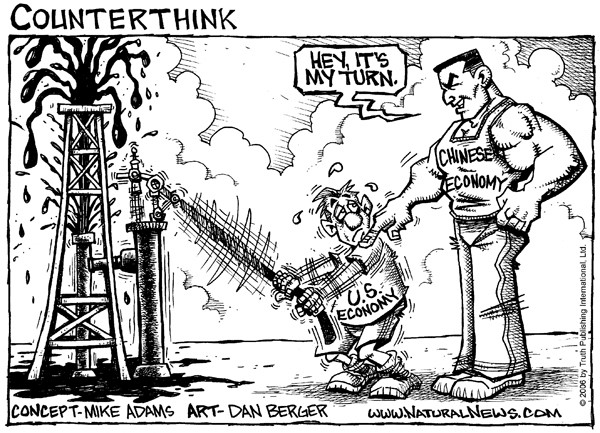
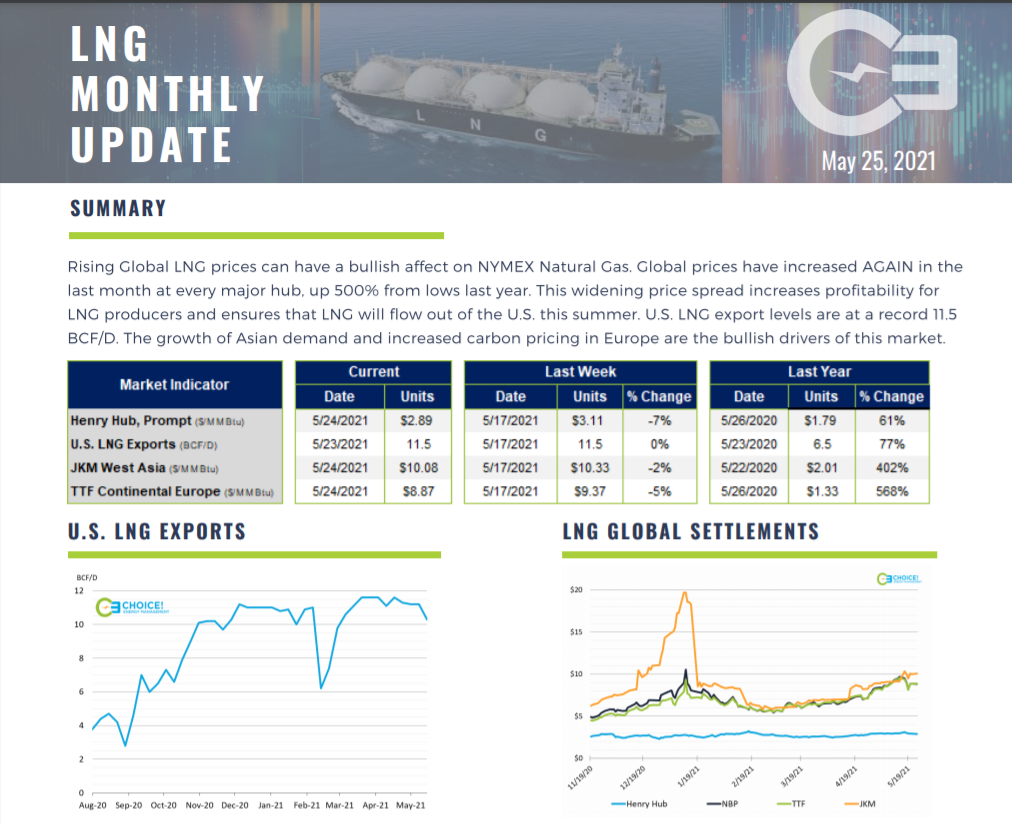
Napoleon famously said “China is a sleeping giant. Let her sleep, for when she wakes, she will move the world.” China has awoken and is now a fierce dragon.  China’s growth in the 21st century is remarkable, with now the second largest GDP requiring large sums of fossil fuels that it does not possess within its borders.  The book Windfall discusses China’s initial “going out” strategy of investing in production in Latin American and African countries. In the meantime, China’s booming economy collided at a perfect time with the United States’ fracking boom, allowing for robust LNG imports. China now has access to the United States’ 12 BCF/Day of LNG capacity, when in previous times they suffered shortages. Demand has still outpaced supply in the LNG world, leading to prices of $12 – $20/MMBtu for China, compared to roughly $3/MMBtu in the U.S.  This cost will continue to fall as natural gas markets globalize bringing prices closer together.

Winner: Europe

Many European nations would prefer to move away from natural gas due to climate policies, but demand is still strong. Even as a “bridge fuel” to carbon neutral goals by 2050, the EU will be burning 550 billion cubic meters annually in 2021 through 2025.  Supply is heavily dependent on Russian imports (over 40% of Europe’s natural gas supply).  With such a strong reliance on Russia’s fossil fuels, European nations have been reluctant to fight Russia/Putin on policy conflicts (see Ukraine gas conflicts/cuts in 2006, 2009, and again in 2013). However, with a growing supply of LNG available, Europe has a new partner in the natural gas supply game. Europe can now diversify their natural gas imports, with the United States becoming a larger player. Windfall projects the United States to represent 18.9% of Europe’s gas imports by 2025. If nothing else, the additional LNG supply provides Europe negotiating ground against Russia, as recently seen with Nord Stream 2 pipeline.

Loser: Russia

To say Russia relies on fossil fuels would be understatement. Oil and natural gas account for more than 60% of Russia’s exports and provide more than 30% of the country’s GDP. The last thing the former Soviet Motherland wants is an oil and gas competition, but that is what it is getting thanks to the United States shale revolution.  In a similar fashion to the oil price collapse in 2014, U.S. LNG is gaining global market share, pushing prices lower. This is hindering Russia’s leverage on pipeline project negotiations like Nord Stream 2 to Europe and Power of Siberia to China. Additionally, it is causing delays in their own LNG export terminals (Valdivostok LNG Project). These pipeline and LNG projects are being reviewed as the financial benefits to Russia are not as strong, thanks to U.S. competition. 

Choice Energy Management – LNG Monthly Update

LNG exports have been a game changer for the U.S. natural gas market, and also for the rest of the world. This has not been lost on the team at Choice! Energy Management, as we have written about the topic for years. To highlight the growing trend, Choice! now provides a monthly LNG Report to its Risk Management clients, showing export levels, U.S. export terminals, and global hub prices. You can access the LNG Monthly Update here or talk to your consultant on how to gain access to the report.