The fall season inherently breeds uncertainty. Questions like, will the weather be 80 degrees and sunny, or 50 and rainy? Is the Stranger Things cast too old to be believable anymore? Or the most important, troubling question of them all, will natural gas storage levels be at unsustainably low levels to start the winter? The natural gas market is experiencing strange times but unlike when we last wrote this blog in 2018, the stakes are much higher. Natural gas fundamentals have evolved in to a Vecna like monster, with higher demand and prices that are now tied to global markets. Whether you’re familiar with the hit Netflix drama Stranger Things or not, there is a similarity between the show’s eerie, escalating drama, and the market movements today. The fall season is full of questions, but wondering if your business is protected from volatile NYMEX price movements should not be one of them.
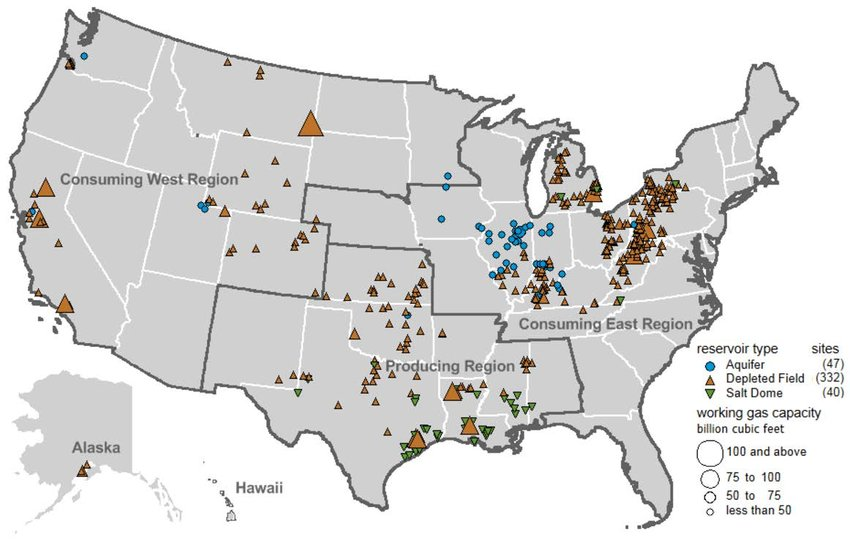
So, what exactly is natural gas storage and why is it important? Like the upside-down world in Stranger Things, utilities and gas suppliers use underground storage to meet times of peak demand throughout the hottest parts of summer and most of the winter. Salt caverns, depleted aquifers, and old wells are physically injected with natural gas as a means of storage until the gas is needed in a high demand period. Over the last ten winters we have withdrawn a range of 1,532 BCF (2016) to as much as 2,965 BCF (2013), due to variability in weather and daily supply/demand balances. This year’s storage situation becomes scarier than Vecna’s killing ritual, when you account for the fact that the national storage level cannot fall below 800 BCF, to keep pressure high enough on pipelines. The fact is, weather variability is enough to drain our storage completely, opening up a “hellish gate” to high pricing for the NYMEX natural gas market.
Source: EIA
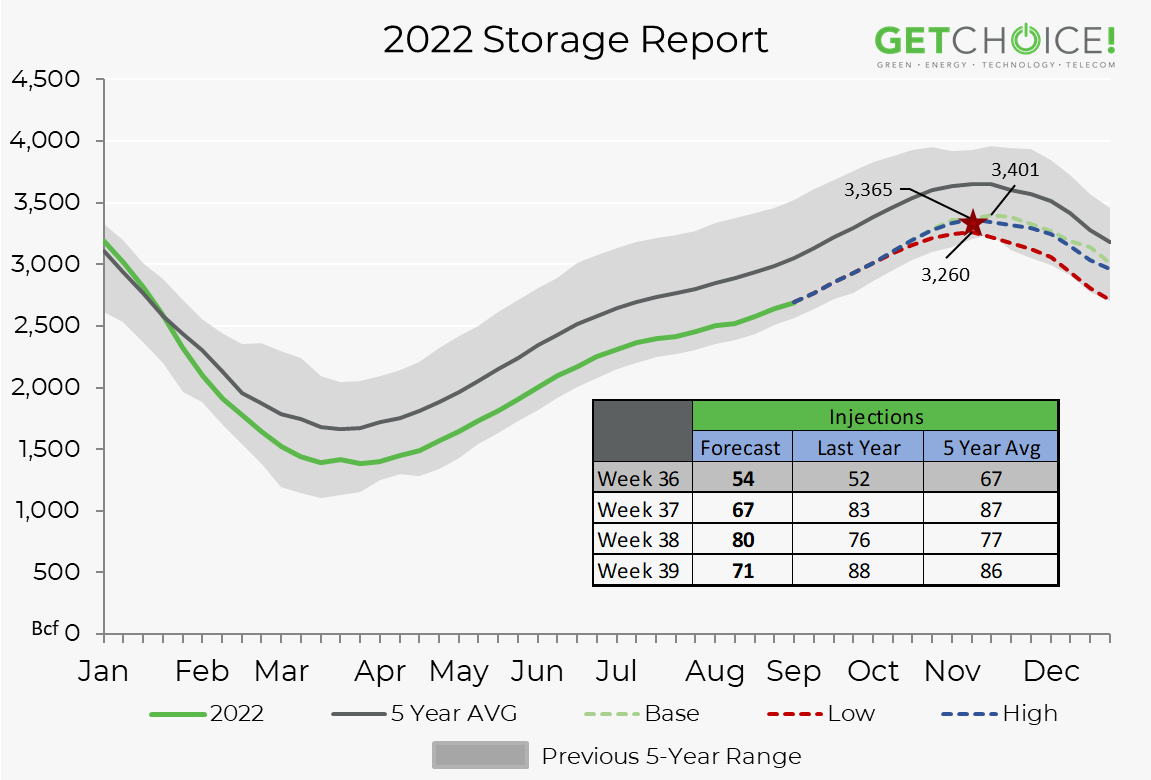
Whether you long for the nostalgic 1980 time period of the show, or a storage inventory level over 4,000 BCF, our situation is grave to say the least. We currently sit at a storage level of 2,694 BCF. This is 349 BCF (12%) below a five-year average that has continued to fall every year since 2018. We started the injection season at 1,382 BCF in storage, setting the tone for what has been the most bullish year in natural gas since 2008. As we discuss monthly in our Bulls and Bears Reports, natural gas supply & demand fundamentals have been increasingly tight due to unforeseen demand increases and a lagging rise in production. Power burn demand for electricity has averaged an additional 2.2 BCF/D (+5%) this year versus last year equating to 375 BCF in extra demand this summer. While this was partially offset by the loss of the Freeport LNG 2 BCF/D of gas exports on June 8th, it has still resulted in a net gain of 221 BCF of demand versus 2021. If Freeport LNG had been operational all summer, our current storage level would be below 2018’s at 2,435 BCF holding all else constant.
Source: GETCHOICE!, EOX Live Data
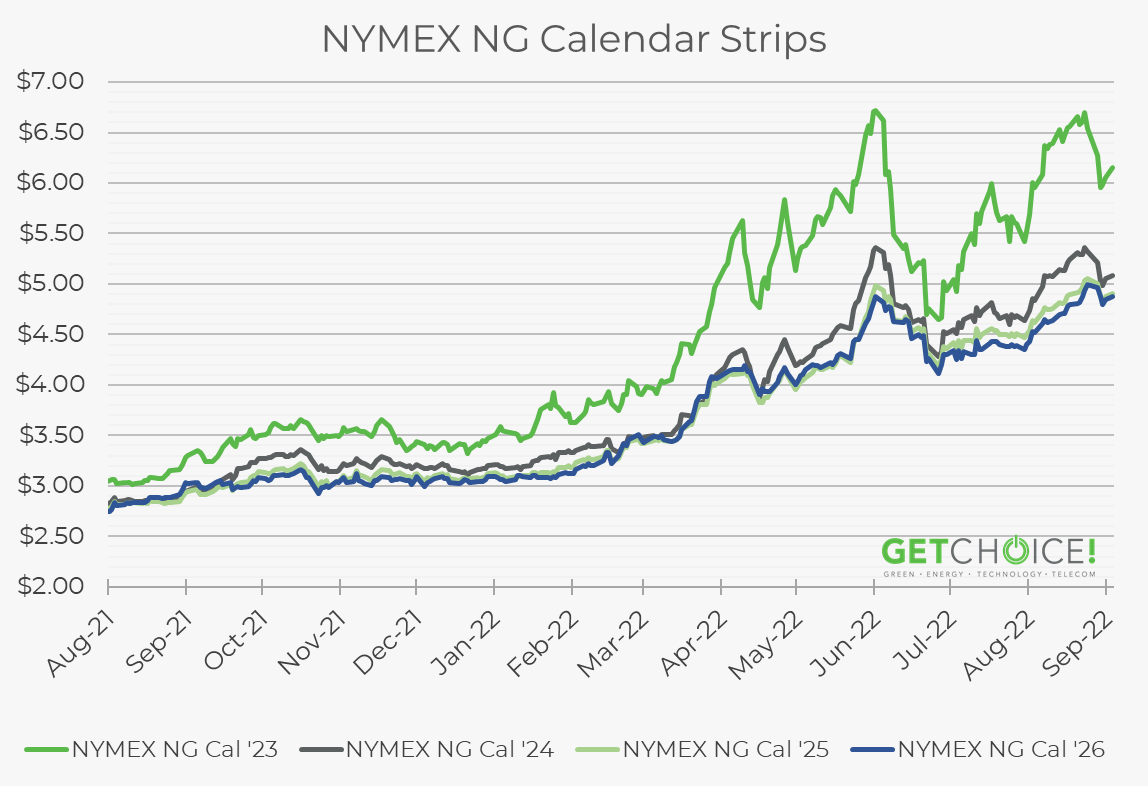
So, what is the implication of the natural gas market being in the ‘Upside down’ world? In a word, volatility. This line from the 2018 blog holds true today, but in the same way that Stranger Things villains have escalated through the seasons from Demagorgons to Mind Flayers to Soviet Russians, price trading ranges have escalated from $0.10 – $0.15 to now $1.00 – $1.40. The NYMEX 2023 Calendar strip has risen and fallen by over $2.00/MMBtu TWICE in the last month, on concerns for this winter. Supply constricted areas such as the Northeast and West Coast are experiencing even larger swings, due to lack of pipeline availability and exposure to global prices. While there is always the chance for this situation to moderate in the coming weeks, the fear of the unknown is currently showing up as a premium in pricing for this winter.
Source: GETCHOICE!, EOX Live Data
This time of year does not have to be genuinely scary, especially for those dependent upon the natural gas market. Whether storage levels or production records are in control, the market fundamentals are always in flux, and it takes a trained analyst to see what’s coming next. With a flexible, comprehensive suite of energy management solutions, GETCHOICE! can help you keep the natural gas market underworld at bay.
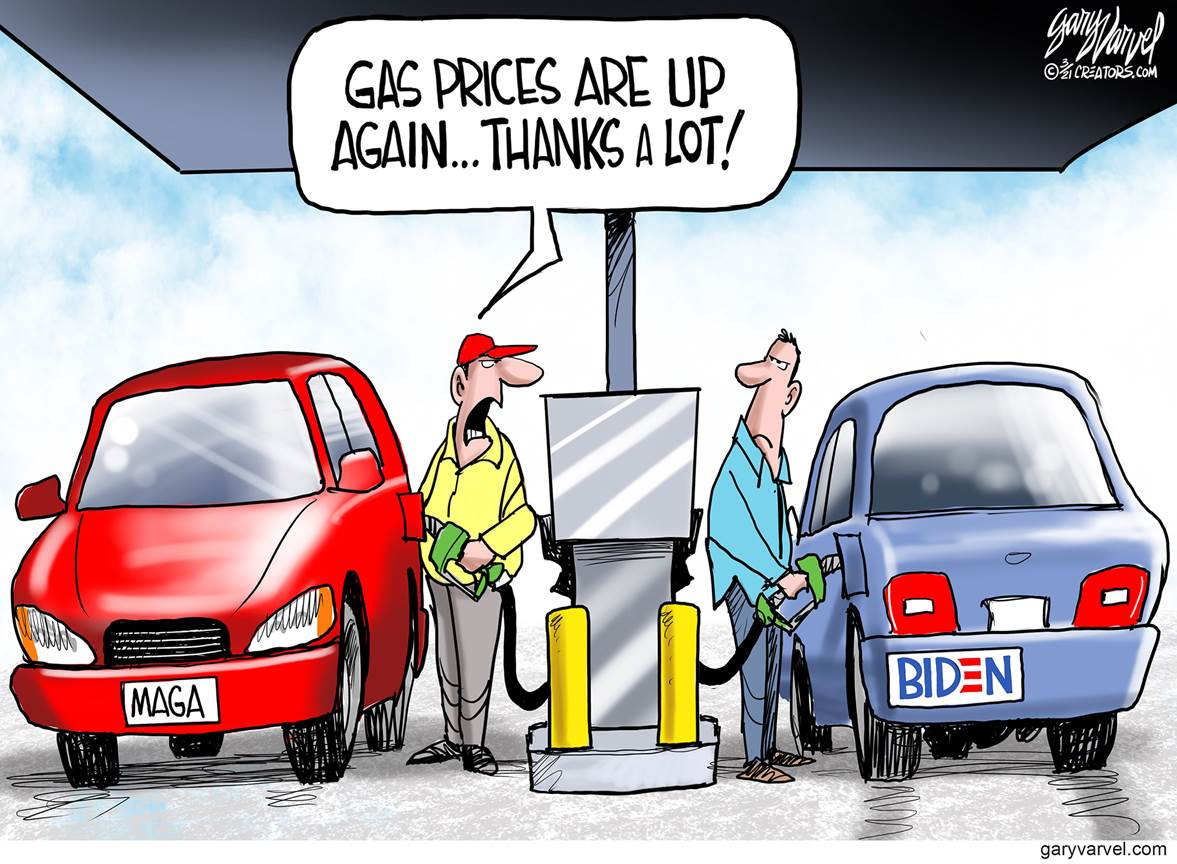
Everyone seems to have strong opinions on the high energy prices impacting our country (and the rest of the world). Record high prices at the pump, coinciding with historically high prices for all fossil fuels have more people talking about energy supply and demand than I can ever remember. I’ve worked in the industry for over 15 years, but now can’t escape the conversation at a cookout, grocery store, or even my kid’s baseball games. I’ve heard it all; from blaming it all on Biden, to “Big Oil” price gauging (remember they make more money than God himself). Unfortunately, all of this conversation has allowed a lot of incorrect information and misleading data to be spread. The intel is often provided by extremely intelligent people. However, with countless market fundamentals to follow and technical trading patterns to evaluate, it’s difficult for those outside the industry to get the full picture of the energy landscape. Today we will discuss and respond to some of the bad energy takes from Twitter we have recently seen by two sports radio hosts from opposite sides of the political aisle.
123
Twitter Name/Handle, Example 1: Matt Jones (@kysportsradio)
Background: Best known as sports radio host and founder of Kentucky Sports Radio. Matt Jones is unlike the customary sports talk jock. His credentials include: being a graduate from Duke University School of Law, authoring a NY Times Best Seller, Mitch, Please!, and an interest in running for US Senate against Mitch McConnell. I personally follow Matt Jones on Twitter because of my love of University of Kentucky athletics and other daily evaluations living in my home state of Kentucky.
Matt Jones’ Tweet: “But I don’t think there is anything our government can do about it (high gasoline prices). We are totally dependent on Foreign Oil.”
Unless you count Mexico and Canada as “foreign oil”, the U.S. is not totally dependent. The U.S. is the largest oil producer in the world and the gap widens when you include all petroleum products (propane, ethane, gasoline, natural gas, etc). The U.S. gained that title in 2018, and oil production peaked in 2019 at 12.25 million barrels per day. While the U.S. does receive crude oil imports, 72% of it comes from North American countries. In the context of talking about Russia and OPEC for our government’s energy policy, we are not dependent upon their oil. Taking it one step further, reducing regulations and bureaucracy in the U.S. would bring more drilling & refineries that would lessen our ties to global prices. There absolutely is something our government could have done and still can do to prevent high energy prices.
123
Matt Jones’ Tweet: “Most individual consumption (oil) come from overseas. We save most of the domestic (oil) for industrial needs.”
This tweet appears to be contradictory. The crude oil market consists of numerous grades of crude oil that vary by weight and sulfur content. Crude with lower sulfur is referred to as sweet, while higher sulfur content is considered sour. The U.S. oil reserves typically produces light-sweet crude oil, which can go to any refinery, and is used mostly for gasoline. While sour crudes (imported from Canada, Russia, and others) produce heavier distillate products, such as diesel and jet fuel, which would be used more for industrial needs. There has not been a refinery built in the U.S. since the 1970’s and many of these refineries are built to take in sour crude. However, the categories on how we can use this oil are not as defined as what the tweet leads readers to believe.
123
Matt Jones’ Tweet : “The same amount of oil is being produced as the Trump era. That’s not the reason that prices have gone up.”
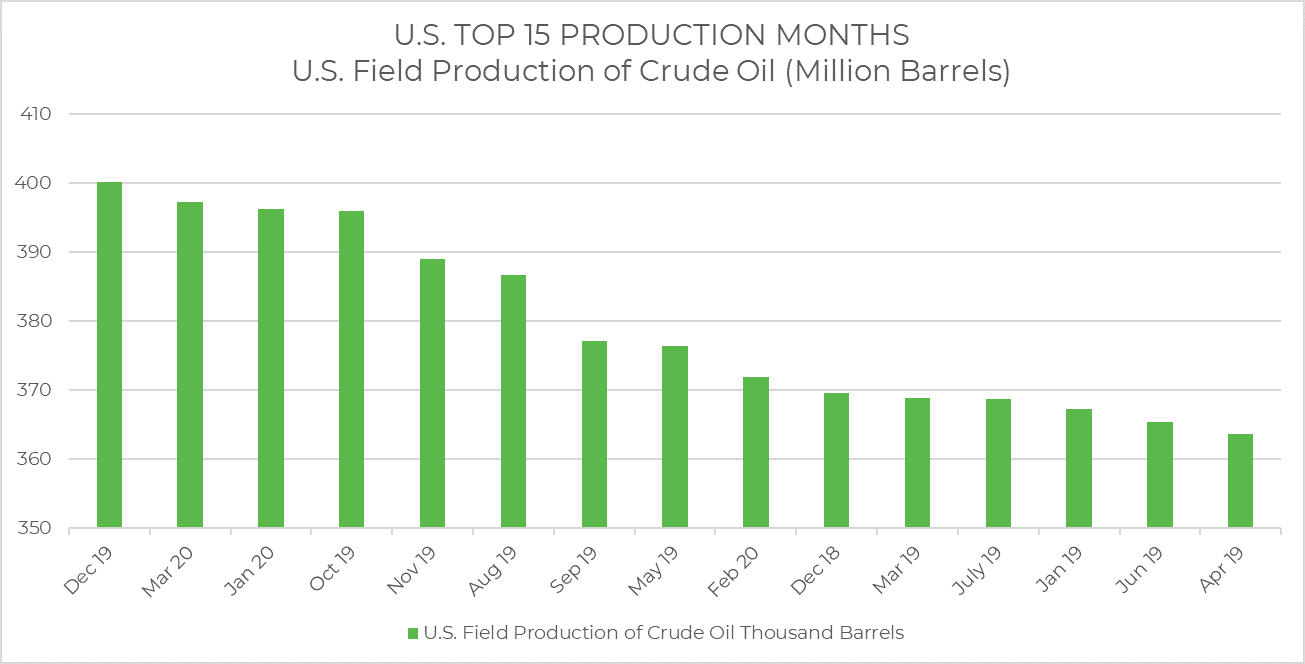
This discussion point is seen a lot, but this is a half-truth. Yes, the U.S. is currently producing as much oil as the final year of Trump’s presidency, but that was during the peak of the pandemic, when demand plummeted and producers shut down wells. The United States’ top 10 oil producing months all occurred during Trump’s presidency as shown in the graph below, peaking in December 2019 at 400,000,000 barrels for the month. The additional 35+ million barrels per month would greatly impact today’s oil market.
123
Twitter Name/Handle, Example 2: Clay Travis (@ClayTravis)
Background: Clay Travis is another lawyer turned radio host, although that might be his only similarities to Matt Jones. Clay received a law degree from Vanderbilt University, but quickly moved to a career in sports with a radio show and the founding of Outkick the Coverage. Currently, Clay is a political commentator on The Clay Travis and Buck Sexton Show, a conservative talk show that replaced Rush Limbaugh. His book, Dixieland Delight, is a must read for SEC football fans like myself, although his love for the low down, dirty Tennessee Volunteers is not his most redeeming trait.
Clay Travis’ Tweet: “Gas has officially passed $5 gallon, an all-time high that acts as a default tax to the poorest Americans, and prices show no signs of coming days any time soon. Joe Biden is the worst president in modern American history, maybe ever.”
Many Democrats simply blame Putin for the rise in oil prices, which is not accurate. Likewise, conservatives like Clay Travis like to incorrectly place ALL of the oil price impacts on President Biden. This was recently discussed by Chris Amstutz in his blog called Shoot Me Straight: Is Biden Wrecking Energy Markets, which discussed the numerous market fundamentals and events that have caused the strong increase in energy prices. As Chris pointed out in the blog entry:
“The truth is, oil, natural gas, and electricity prices began rising in the summer of 2021 to now (up over 100% year over year), due to chronic underinvestment in the energy industry. COVID-19 lockdowns destroyed demand for hydrocarbons, leading to some of the biggest financial losses in the history of American petroleum. The White House now claims that these same companies are gouging Americans, ignoring the need for producers to show a financial return to investors who also lost heavily in 2020-2021. This, coupled with policies that have inhibited domestic pipeline growth and drilling, has added to the global energy shortages we see today.”
Clay Travis Tweet : “Last night’s @seanhannity hit with @GeraldoRivera debating Biden’s plan for high gas prices. Enjoy:
Video: 4:54 Mark…Sean Hannity “He (Biden) was handed energy independence…”
The term “energy independence” is used often, and is something that every U.S. presidential candidate has promised for the last 50 years (as well as stating that this is most important election of my lifetime 😊). However, the term is sort of a misnomer in that the U.S. does not have the infrastructure in place to halt imports completely from other countries and act “independent”. Pipelines, refineries, and economic/political policy have led to our current situation. The blame of high energy prices cannot and should not ever fully fall on a sitting President, due to decades of planning and building in this industry. The U.S. is a “net exporter” of petroleum, but this simply means the value of petroleum we export exceeds the value of what we import. Estimates are that the U.S. uses roughly 18.1 million oil equivalent barrels/day of petroleum, and we produced 18.4 million. How and where these barrels get used, and what part of the world they come from is a much deeper rabbit hole that cannot be condensed into a sports talk show or energy market blog.
123
Conclusion:
As these examples clearly show, two well-educated people have a hard time of getting all the facts straight when discussing energy fundamentals. It’s nearly impossible for anyone outside the industry to keep up with countless, evolving fundamentals that aren’t limited to: storage, weather, rig counts, geopolitics, frac spreads, and U.S. vs. global demand. This is exactly how GETCHOICE! assists our clients. Through market calls, white papers, and market presentations our Risk Management team ensures our clients have the market intelligence to navigate the energy landscape and make educated purchasing decisions. Contact us or your GETCHOICE! Client Advisor to find out more details about our Strategic Procurement and Risk Management services. As for Matt Jones and Clay Travis, I don’t want to be the guy that tells them to “stick to sports” but I sure wouldn’t recommend taking their energy advice.
We regret to inform you; the politicians are back at it again. We have commented on politics in energy numerous times in the past, and today we look to address the volley of energy headlines that have come out in recent weeks. Like every topic, there is nuance and gray area that is difficult to explain to those outside the energy industry. Today we start a new blog series to address ongoing questions from popular headlines in the industry. GETCHOICE! has decades of combined energy experience, and like a cowboy in the wild west of the energy industry, we always shoot you straight. Here are some of the recent headlines with additional nuance discussed.
Will Biden’s Strategic Petroleum Reserve (SPR) Release Lower Gasoline Prices?
This article reports that the White House predicts gasoline prices to fall 10-30 cents per gallon on the announcement that 180 million barrels of oil would be released for U.S. consumption. SPR releases have had mixed results in the past and it is difficult to say what the final outcome for this will be. The visible outcome thus far, is that the market has lowered WTI oil price futures for the next 6 months, but increased prices beyond that point (see chart below). This is due to producers adapting their production outputs lower in the long run due to lower profit margins in the short run. So all in all, the more complicated answer is that politicians can marginally adjust oil and natural gas prices in the short run but these policies have rippling, unintended consequences in the future. Upward price movements, like what we have seen in the last 6 months, ultimately are tied to long term fundamentals of supply and demand against the back drop of industry trends.
Has the U.S. given up on the Green Energy transition?
This article discusses the “reluctance of President Biden to unleash clean energy rhetoric”. Green energy topics do not typically poll well when energy prices are high (hence the President’s reluctance), but many U.S. and European politicians believe that high prices are the catalyst to increasing renewable energy sources on the grid. The reality is that the U.S. is still not close to a macro, nationwide green future due to the sheer scale in technology required to change the current system. However, micro, individual business level green-initiatives are becoming more popular due to the ability to save money on utilities. GETCHOICE!’s utility bill management platform GET: Smart Management Technology (formerly Choice! Data Connect), allows businesses to benchmark usage, track Scope 2 & 3 carbon emissions, and quantify savings from these green initiatives at the site level. This trend will grow due to high energy prices and the need for increased cost efficiencies.
Are Oil, Natural Gas, and Electricity Prices Increasing Because of Vladimir Putin?
The White House recently published this fact sheet, addressing “Putin’s price hike at the pump”. While it is easy and convenient to blame high energy prices on the Russian invasion of Ukraine, it is but a small factor in the energy market price increase, and should not be used as a meaningful procurement strategy. The truth is, oil, natural gas, and electricity prices began rising in the summer of 2021 to now (up over 100% year over year), due to chronic underinvestment in the energy industry. COVID-19 lockdowns destroyed demand for hydrocarbons, leading to some of the biggest financial losses in the history of American petroleum. The White House now claims that these same companies are gouging Americans, ignoring the need for producers to show a financial return to investors who also lost heavily in 2020-2021. This, coupled with policies that have inhibited domestic pipeline growth and drilling, has added to the global energy shortages we see today. In all reality, Vladimir Putin likely sees the global energy shortage and lack of energy security as an opportunity to advance Russia’s interests in Ukraine, knowing that Europe has no other choice than to buy their petroleum.
The path forward for energy prices is unclear. The answer to the blog question is that President Biden has only a limited capability to affect energy prices in the short run, but the effects of policies today could shape prices two years from now. In the same right, President Biden cannot be blamed fully for today’s energy prices, which were set in to motion during the height of COVID-19. Government directed policy has a tendency to cause the opposite of what is intended in an industry as complex as energy. The facts remain that the globe has felt the effects of an energy shortage since last summer and it will likely continue to be felt for another year as the market stabilizes. The current administration has vocally opposed the use of hydrocarbons, but is quickly realizing the damaging economic effects of a world without them. GETCHOICE! continues to monitor the news closely, looking out for our client’s financial well being during these times of high energy prices.