Strange Times: Natural Gas Storage Level – Remastered

By Chris Amstutz


No Spoilers

The fall season inherently breeds uncertainty. Questions like, will the weather be 80 degrees and sunny, or 50 and rainy? Is the Stranger Things cast too old to be believable anymore? Or the most important, troubling question of them all, will natural gas storage levels be at unsustainably low levels to start the winter? The natural gas market is experiencing strange times but unlike when we last wrote this blog in 2018, the stakes are much higher. Natural gas fundamentals have evolved in to a Vecna like monster, with higher demand and prices that are now tied to global markets. Whether you’re familiar with the hit Netflix drama Stranger Things or not, there is a similarity between the show’s eerie, escalating drama, and the market movements today. The fall season is full of questions, but wondering if your business is protected from volatile NYMEX price movements should not be one of them.

So, what exactly is natural gas storage and why is it important? Like the upside-down world in Stranger Things, utilities and gas suppliers use underground storage to meet times of peak demand throughout the hottest parts of summer and most of the winter. Salt caverns, depleted aquifers, and old wells are physically injected with natural gas as a means of storage until the gas is needed in a high demand period. Over the last ten winters we have withdrawn a range of 1,532 BCF (2016) to as much as 2,965 BCF (2013), due to variability in weather and daily supply/demand balances. This year’s storage situation becomes scarier than Vecna’s killing ritual, when you account for the fact that the national storage level cannot fall below 800 BCF, to keep pressure high enough on pipelines. The fact is, weather variability is enough to drain our storage completely, opening up a “hellish gate” to high pricing for the NYMEX natural gas market.
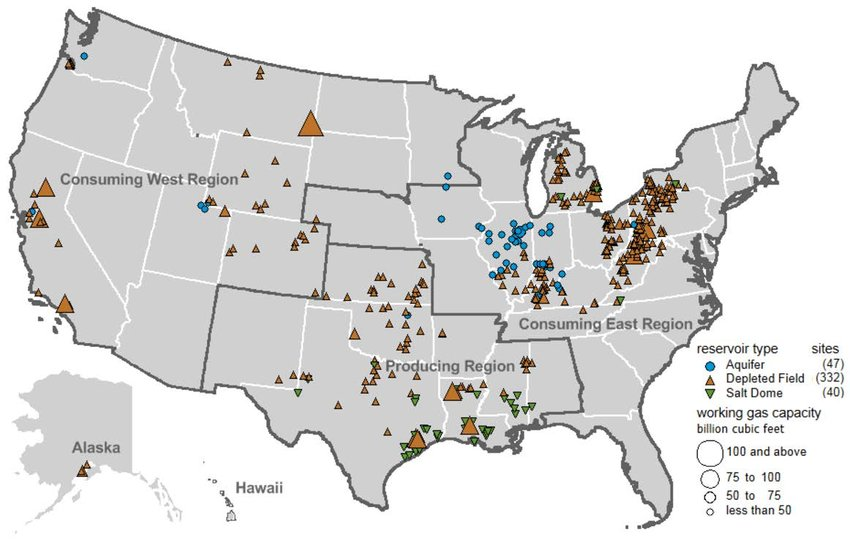
Source: EIA

Whether you long for the nostalgic 1980 time period of the show, or a storage inventory level over 4,000 BCF, our situation is grave to say the least. We currently sit at a storage level of 2,694 BCF. This is 349 BCF (12%) below a five-year average that has continued to fall every year since 2018. We started the injection season at 1,382 BCF in storage, setting the tone for what has been the most bullish year in natural gas since 2008. As we discuss monthly in our Bulls and Bears Reports, natural gas supply & demand fundamentals have been increasingly tight due to unforeseen demand increases and a lagging rise in production. Power burn demand for electricity has averaged an additional 2.2 BCF/D (+5%) this year versus last year equating to 375 BCF in extra demand this summer. While this was partially offset by the loss of the Freeport LNG 2 BCF/D of gas exports on June 8th, it has still resulted in a net gain of 221 BCF of demand versus 2021. If Freeport LNG had been operational all summer, our current storage level would be below 2018’s at 2,435 BCF holding all else constant.
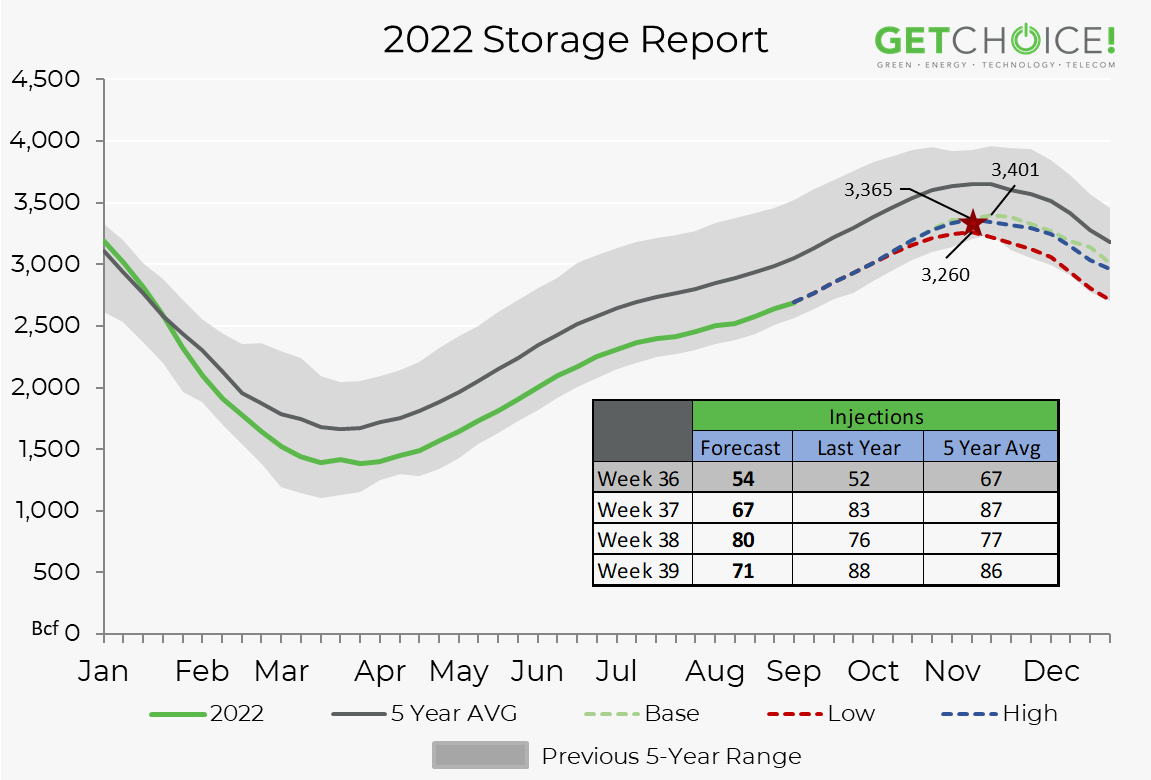
Source: GETCHOICE!, EOX Live Data

So, what is the implication of the natural gas market being in the ‘Upside down’ world? In a word, volatility.  This line from the 2018 blog holds true today, but in the same way that Stranger Things villains have escalated through the seasons from Demagorgons to Mind Flayers to Soviet Russians, price trading ranges have escalated from $0.10 – $0.15 to now $1.00 – $1.40. The NYMEX 2023 Calendar strip has risen and fallen by over $2.00/MMBtu TWICE in the last month, on concerns for this winter. Supply constricted areas such as the Northeast and West Coast are experiencing even larger swings, due to lack of pipeline availability and exposure to global prices. While there is always the chance for this situation to moderate in the coming weeks, the fear of the unknown is currently showing up as a premium in pricing for this winter.
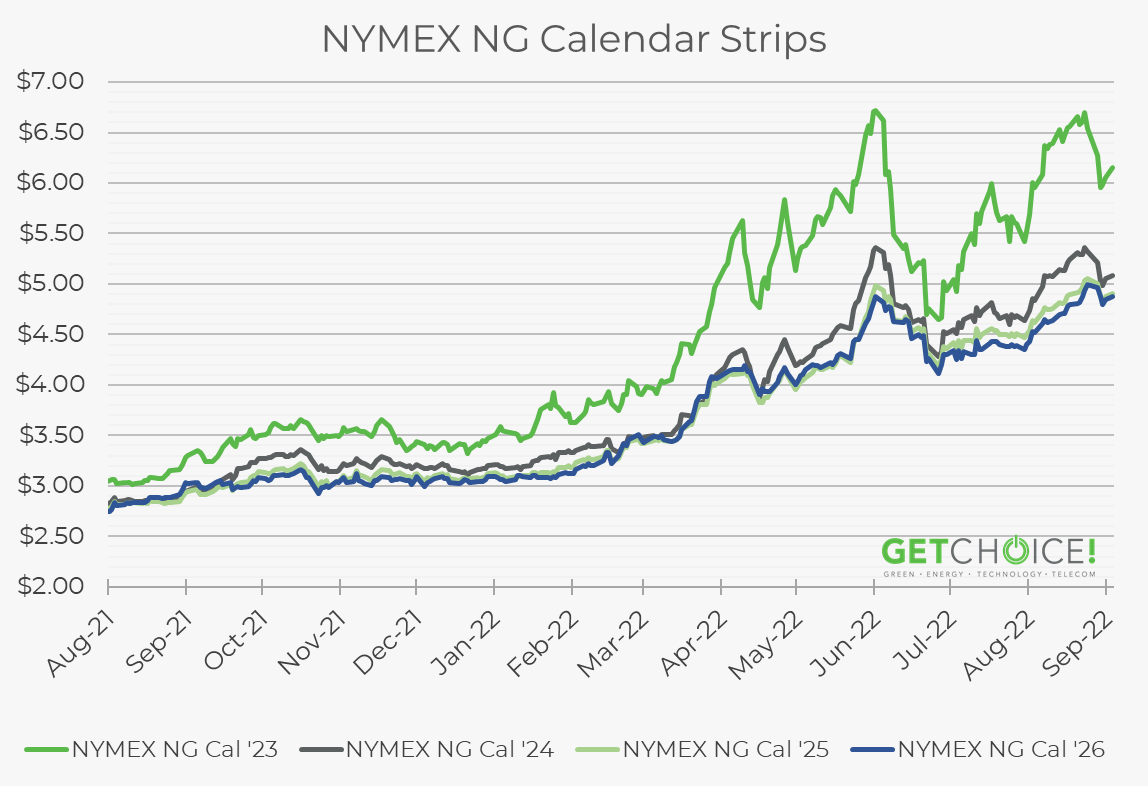
Source: GETCHOICE!, EOX Live Data

This time of year does not have to be genuinely scary, especially for those dependent upon the natural gas market. Whether storage levels or production records are in control, the market fundamentals are always in flux, and it takes a trained analyst to see what’s coming next. With a flexible, comprehensive suite of energy management solutions, GETCHOICE! can help you keep the natural gas market underworld at bay.

Source: Netflix’s Stranger Things Series


ERCOT Disaster: MythBusters

By: Chris Amstutz

The winter storm of the century in the energy capital of the world has frozen all preconceived notions of the Electric “Reliability” Council of Texas. As the snow melts and the plumbing repairs begin, the analysts at Choice! Energy Management find solace in aiding Texans through these difficult times. With any natural disaster, people want answers and to know how their interests will be protected in the future. This has given way to the blame game and many myths about the Texas power market. To help address these questions we look back to the long running, scientific TV series MythBusters. The causes of the ERCOT disaster are innumerable and it is with an open mind that we dissect the situation.

Myth (noun): A widely held belief not factually proven; an exaggerated or idealized conception.

Myth #1: “ERCOT should have been able to prevent the power outages with the 7 day notice they had of the impending weather event.”

Answer: Busted

This disaster has shown the weaknesses of the ERCOT grid, especially in the winter. Generation assets in Texas did not have the infrastructure upgrades to prevent malfunction during the cold, known as winterization, and this is likely the main reason for failure last week. Winterization was an expense spared by generators since a deep freeze does not occur often, helping Texans to enjoy lower power prices. Like the Titanic heading for the Iceberg (see the MythBusters confirm that Jack could’ve survived with Rose here), the 7 day forecast was not enough time to prepare the grid.  ERCOT operates under the assumption of a ten-year normal winter (which will certainly change now), and this event was likely a one-hundred-year event.

Myth #2: “One single energy generation source (renewable, fossil fuel, or nuclear) was to blame for the blackouts.”

Answer: Busted

This popular political talking point (everything is political these days), has been thrown around a lot. To this we point to the graphic below. Yes, the wind turbines were frozen and yes, natural gas and coal did have the largest absolute decreases in generation available, but pointing to half the truth is not the truth. In all reality, the frozen precipitation had huge impacts on every generation source. From pre-freeze levels, it is estimated that natural gas lost 15-20 Gigawatts (GW’s) of generation, not including the 15 GW’s that were offline for seasonal maintenance. Wind Generation fell from 5-10 GW’s pre-freeze to 1-2 GW’s during. Coal lost 6 GW’s during the freeze, and even the incredibly steady nuclear baseload lost 25% (1.3 GW’s) due to the fear of insufficient water supplies. Future ERCOT conversations will now involve adequate winterization, and a repricing of all assets not protected from winter weather and sufficient reliability.

Myth #3: “This was a black swan weather event so the chances that prices get this crazy again are tiny.”

Answer: Busted

A black swan event is defined as something “unpredictable” but this weather event has occurred before in ERCOT. The Christmas cold of 1989 was the most similar event to this, with colder absolute temperatures but not lasting as long. The grid also came close to blackouts in the 2011 cold event. When you also look at demand side issues, like the fact that Texas has added 1.5 million homes since 2011 (the most of any state by 600k homes), and 62% of these homes require electricity for heating, it compounds the issue. We have discussed power market volatility in our past blogs here, here, and here. With less reliable, non-winterized generation on the grid, ERCOT will remain susceptible to price spikes, and higher futures prices will be needed to steady the market.

Myth #4: “Forces outside of Texas wanted the blackouts to occur, and sabotaged Texans in some form.”

Answer: Busted

While not a widespread myth we have seen this claim thrown around. There is no reason to believe at this time that willful negligence or any other human induced action in the short time leading up to and during the event caused the power outages. From fake snow conspiracies (see here), to rumors of Department of Energy sabotages, there has not been any evidence of at this time. It is true that several members of the ERCOT board (including the now former chairman) reside out of state, but as of today all of these members have resigned due to criticism.

The last two weeks have certainly been difficult. Consumers are very much justified in demanding that reliability of the grid is prioritized to prevent an event like this from happening again. However, everyone is quick to forget the enormous amount of savings the ERCOT market structure has provided Texas in past years. The critics of the free-market ERCOT system are now louder than ever, and the future of this system is unknown. Opportunity will favor the informed, as the implications shake out from this event. The analysts at Choice! Energy Management take pride in helping our clients prepare, and look forward to helping more Texans navigate this ever-changing energy world.

Strange Times: Natural Gas Storage Level

By: Chris Amstutz

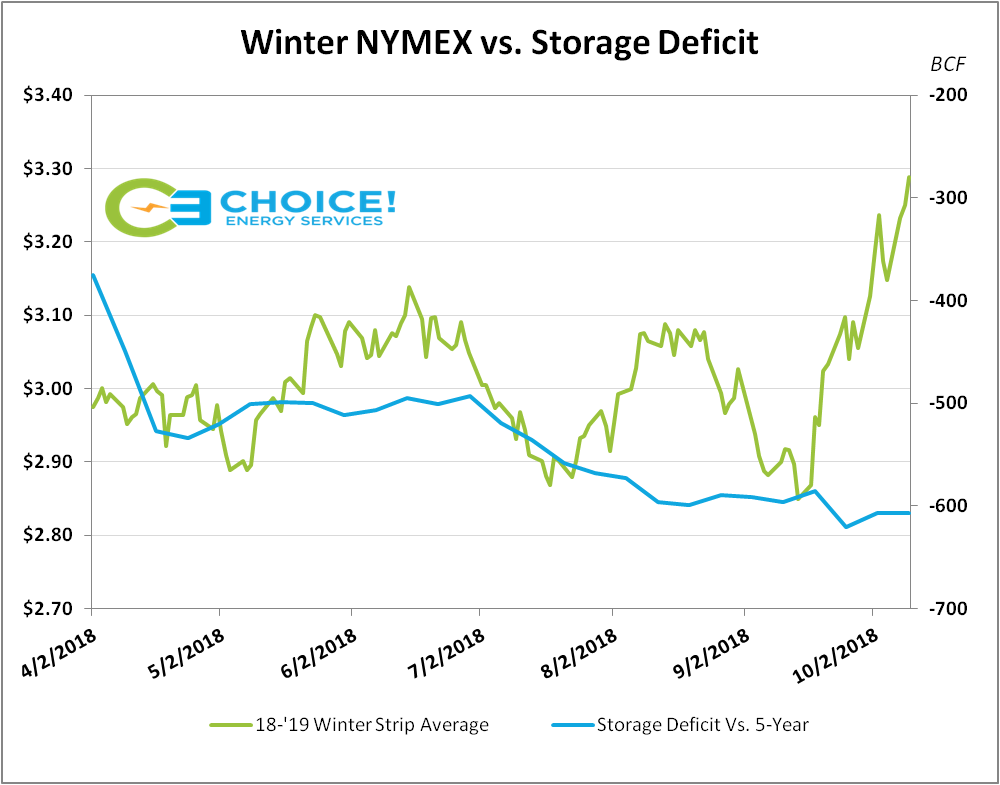
The fall season inherently breeds uncertainty. Questions like, will the weather be 80 degrees and sunny, or 50 and rainy? Should I pay money to have someone scare me, or just sit at home and let the evening news do it? Or the most important, troubling question of them all, will natural gas storage levels be at unsustainably low levels to start the winter? The natural gas market is experiencing strange times. We are seeing some fundamentals experience record highs, and some record lows. Whether you’re familiar with the hit Netflix drama Stranger Things or not, there is a similarity between the show’s eerie drama, and the market movements that are being spurred by low natural gas storage levels. The fall season is full of questions, but wondering if your business is protected from potentially volatile NYMEX price movements this winter should not be one of them.

Whether you long for the nostalgic 1980 time period of the show, or a storage inventory level over 4,000 BCF, our situation is grave to say the least. We currently sit at a storage level of 2,956 BCF. That is 607 BCF below the five-year average, and 627 BCF below last year. We started the injection season at 1,281 BCF in storage, but bearish sentiments were abounding at the time with production setting new records then, and nearly every week since (7-12 BCF/Day above the five year average). Unfortunately, several summer fundamentals, previously discussed in our Bulls and Bears Reports, made up that difference on the demand side, preventing the needed storage injections. Similar to Dart the underfed pollywog, we have only averaged a weekly injection of 81 BCF this year, as opposed to the five-year average of 82 BCF. The EIA expects the storage level to get up to 3,263 BCF (lowest level since 2005), but many projections are lower.

So what is the implication of the natural gas market being in the ‘Upside down’ world? In a word, volatility. For most of 2018 we have seen intraday prompt month trading ranges of 5-10 cents. This has now increased to 10-15 cent ranges, and could become larger the closer we get to winter. The NYMEX 2019 Calendar strip has increased $0.20/MMBtu in the last month, on concerns for this winter. Supply constricted areas such as the Northeast and West Coast may experience even larger swings, depending upon the weather. While there is always the chance for this situation to moderate in the coming weeks, the fear of the unknown is currently showing up as a premium in pricing for this winter.

This time of year does not have to be genuinely scary, especially for those dependent upon the natural gas market. Whether storage levels or production records are in control, the market fundamentals are always in flux, and it takes a trained analyst to see what’s coming next. With a flexible, comprehensive suite of energy management solutions, Choice Energy Services can help you keep the natural gas market demogorgons at bay.

Confidential: Choice Energy Services Retail, LP.